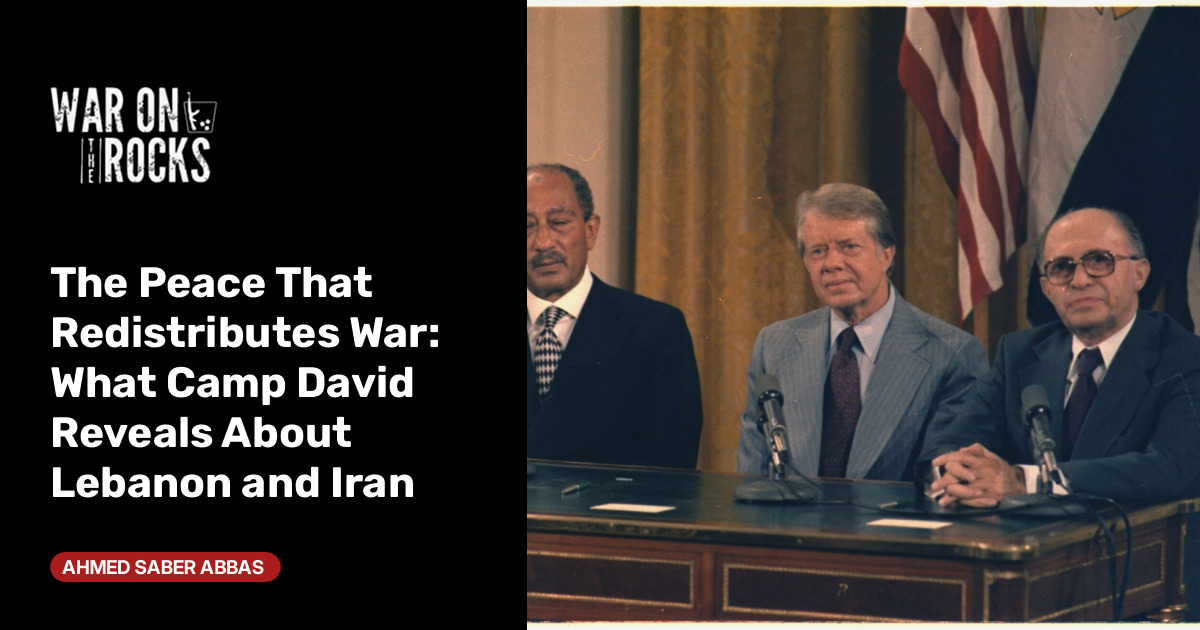
A new analysis of Camp David presents the agreement not simply as a peace breakthrough, but as a case study in how diplomacy can redirect conflict instead of fully resolving it. Framed around the idea that patterns reveal more than official statements, the piece argues that major negotiations often expose what leaders avoid saying and what settlements leave for later.
Through that lens, Camp David is treated as more than a bilateral deal. The article suggests its deeper significance lies in how it altered the wider regional landscape, shifting pressure, alliances and confrontation elsewhere. In this reading, peace can function as a redistribution of war, moving instability from one arena to another rather than removing it altogether.
That broader pattern is linked to Lebanon and Iran, which the analysis presents as important to understanding the aftereffects of regional diplomacy. Rather than seeing those fronts in isolation, the argument points to a connected Middle East in which agreements, rivalries and postponed disputes echo across borders. What appears settled in one place may intensify competition in another.
The result is a critique of narrow treaty analysis. By focusing on patterns, deferred questions and strategic consequences, the piece encourages readers to view Camp David as part of a longer chain of regional bargaining. In that framework, peace agreements are not only endings to conflict, but also mechanisms that can reshape where and how the next struggle unfolds.