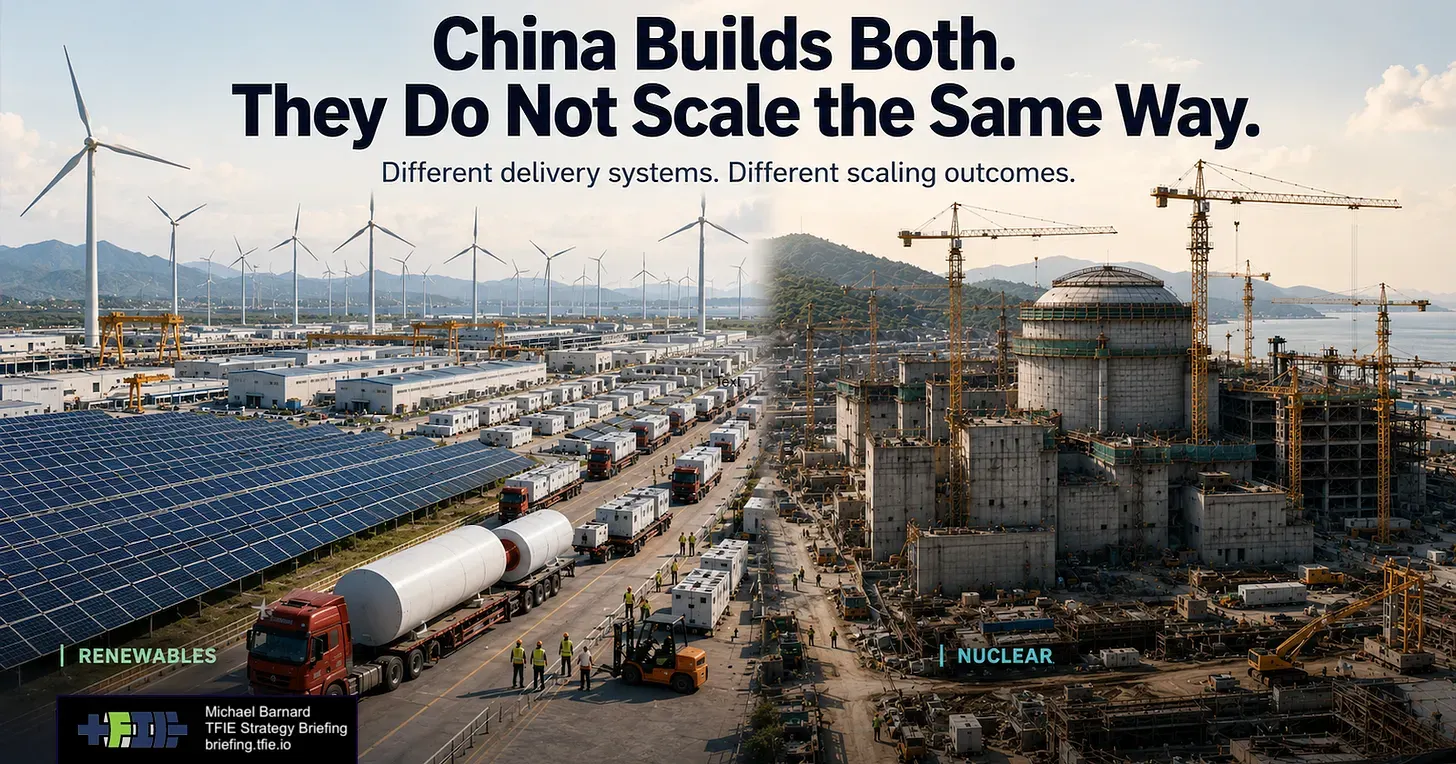
China continues to outperform its renewable energy targets while falling short on nuclear plans, according to the article’s central argument. The contrast points to a broader pattern in the country’s energy buildout: wind and solar can be expanded quickly through large-scale manufacturing and repeatable deployment, while nuclear projects face the slower realities of complex construction.
The piece suggests that China’s success in renewables is closely tied to industrial throughput. Wind turbines, solar panels, and related infrastructure can be produced and installed at scale, allowing capacity to rise faster than many official goals anticipate. That makes renewable growth easier to accelerate once factories, supply chains, and grid connections are moving in the same direction.
Nuclear power follows a different path. Even in a country known for rapid infrastructure development, nuclear expansion depends on lengthy project timelines, major capital commitments, and the risks that come with large, one-off builds. Those characteristics make it harder to consistently deliver reactors on schedule compared with the more modular rollout of wind and solar.
The comparison highlights an important point in China’s energy transition. When policy support is matched with strong manufacturing capacity, renewable targets can be surpassed. But nuclear energy remains tied to the slower pace of megaproject execution, making missed targets more likely even when long-term ambitions remain high.