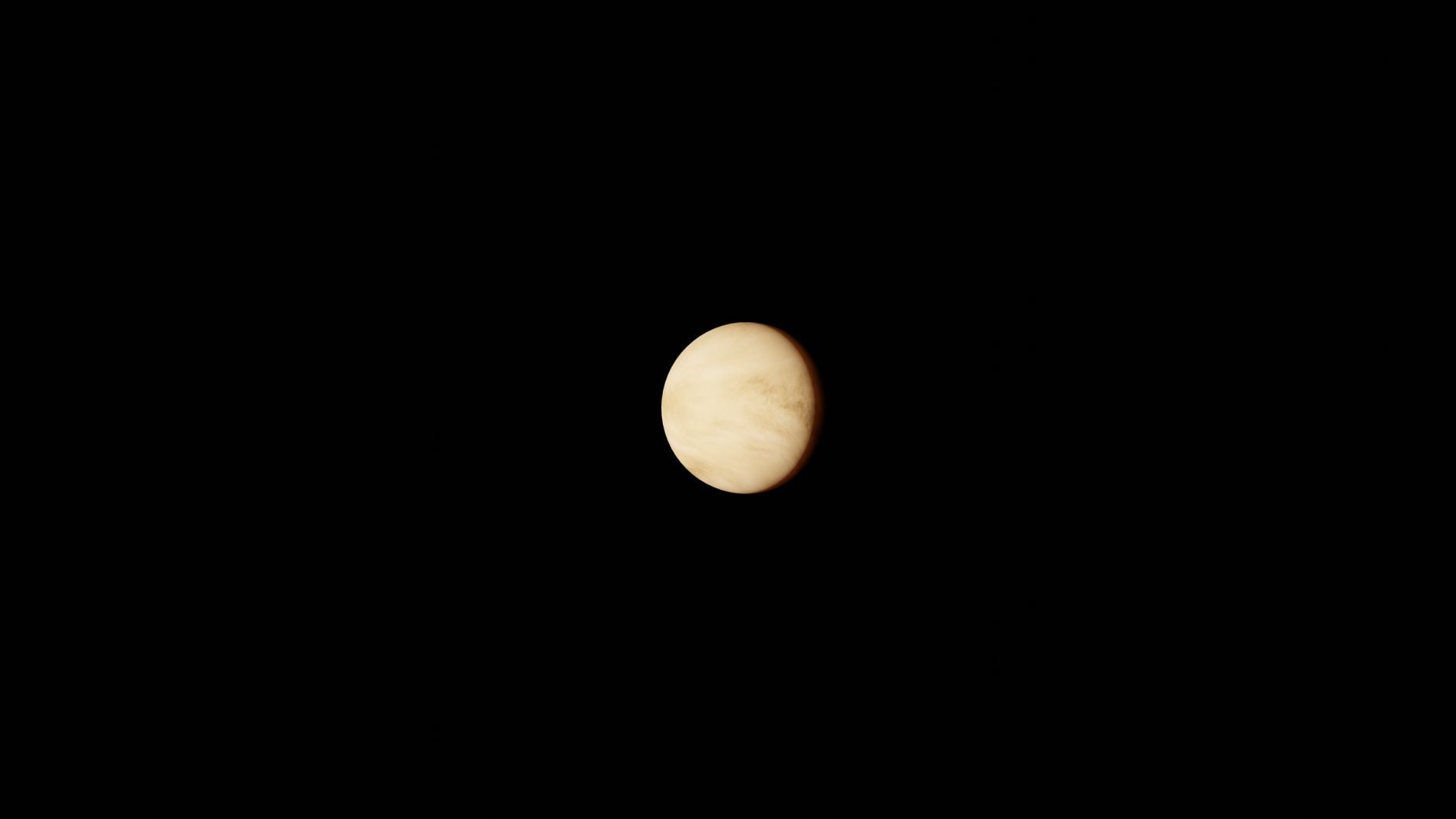
Venus has one of the strangest timekeeping problems in the Solar System. The planet’s solid surface rotates so slowly that one full spin takes about 243 Earth days, making a Venus day longer than its year. At the same time, the planet’s upper clouds race around the world in roughly four days.
That contrast makes Venus seem to run on two very different clocks. The rocky planet below turns at an extremely sluggish pace, while the atmosphere far above moves far faster. Planetary scientists have been trying for decades to understand how those two motions can coexist.
The mystery is important because it points to deeper questions about how a planet’s atmosphere behaves when its rotation is unusually slow. Venus offers an extreme example of a world where the timing of surface motion, orbital motion and atmospheric circulation do not match in any simple way.
By examining why Venus spins so slowly and why its clouds move so quickly, researchers can learn more about how planetary atmospheres work under very different conditions from Earth. That makes Venus not just a curiosity, but a key test case for understanding weather and climate across other worlds.