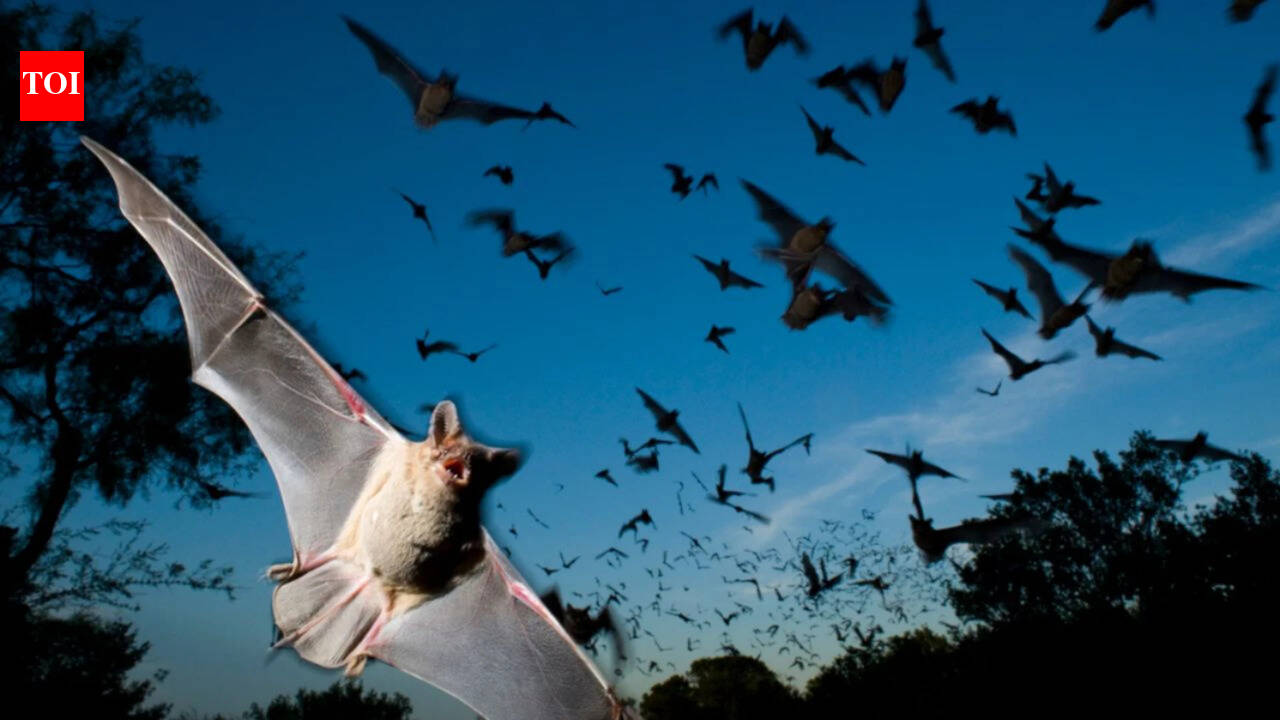
Scientists have reported that Japanese horseshoe bats living in crowded colonies appear to overcome a major echolocation challenge: too many animals sending out sonar signals at the same time. The finding adds to what researchers know about how bats function in dark, busy environments where sound is essential for survival.
Bats depend on echolocation to move through darkness and to locate insects. They emit high-frequency calls and listen for the returning echoes to judge where objects and prey are. In a packed colony, however, that system could become difficult to use because many overlapping calls may create a noisy acoustic setting.
The new research suggests that Japanese horseshoe bats have a way to deal with this sonar interference while living close together. That means they can still separate useful echoes from surrounding noise, helping them keep track of their surroundings even when many other bats are active nearby.
The study highlights how social animals can adapt to communication and navigation problems in dense groups. For bats, solving this noisy sonar problem is especially important because echolocation supports both safe movement and successful hunting.





