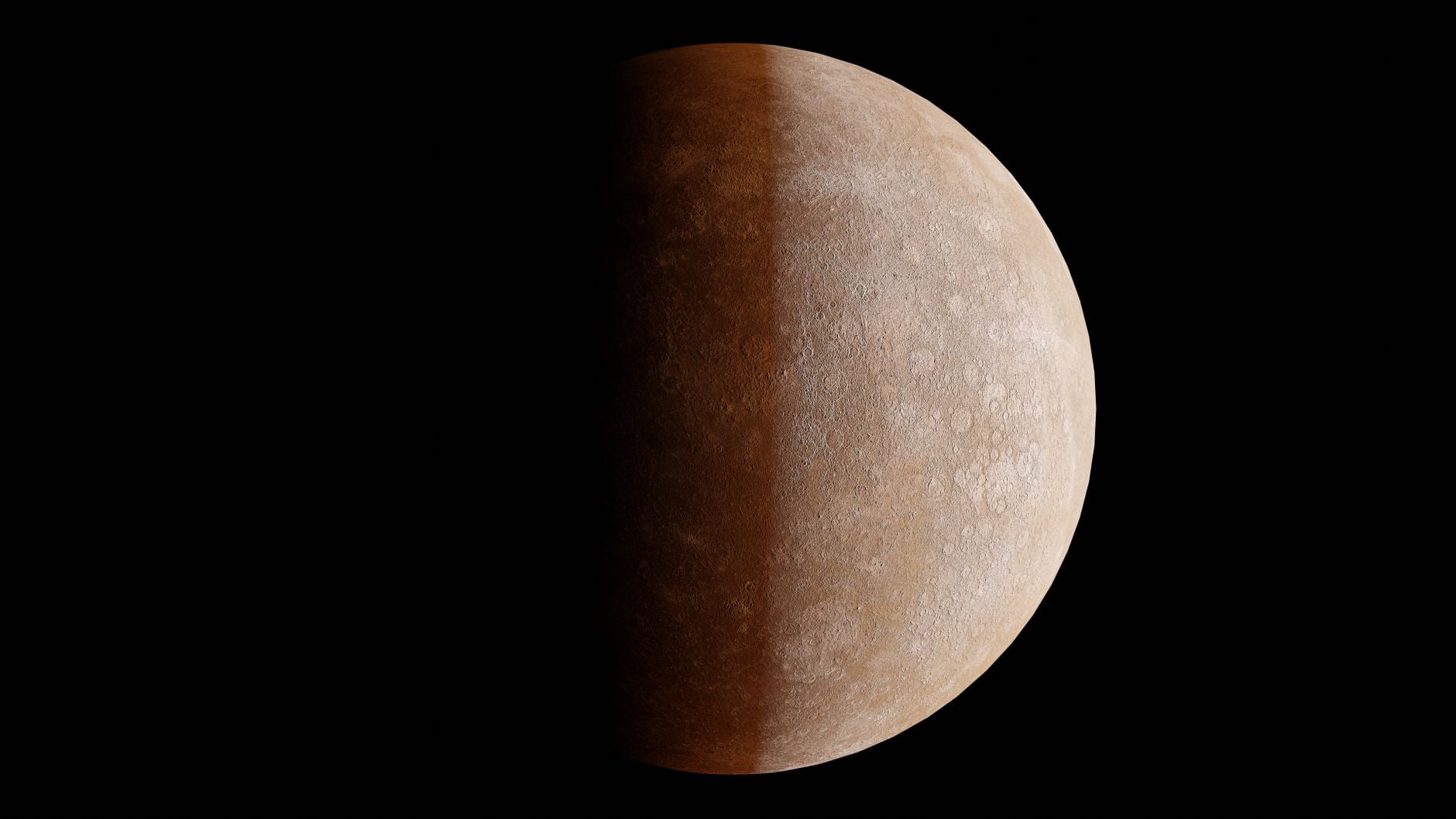
Mercury looks like the last place in the Solar System where ice should survive. As the closest planet to the Sun, its sunlit surface can soar to about 430 degrees Celsius around noon, creating an extreme contrast between blazing daytime heat and the frozen material found at its poles.
The key to that mystery lies inside polar craters that never receive direct sunlight. In those permanently shadowed areas, conditions stay cold enough for water ice to remain in place even while nearby terrain is exposed to intense solar heating.
According to the report, these dark crater floors hold billions of tonnes of ice. That means Mercury’s surface is not defined by one single temperature everywhere; instead, small regions with constant darkness can preserve frozen deposits beside some of the hottest landscapes in the Solar System.
The discovery highlights how a planet known for extreme heat can still protect water in the right locations. On Mercury, the difference between direct sunlight and permanent shadow is enough to create a surprising frozen refuge at the poles.