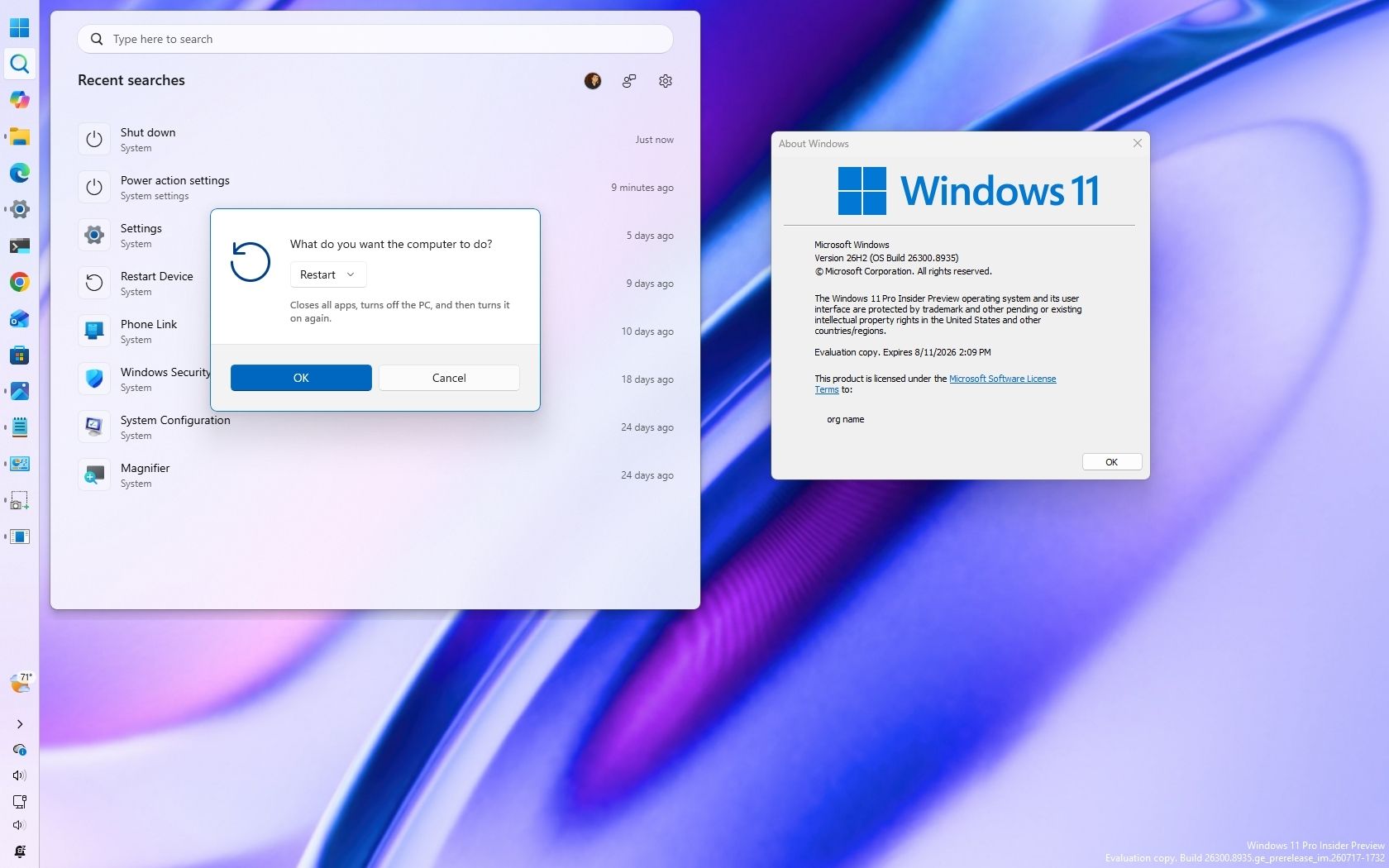
Microsoft’s next major Windows 11 release is expected this fall as version 26H2, and early details point to a broad set of usability upgrades rather than a dramatic visual reset. The update appears focused on improving the parts of Windows people use most often every day, while also bundling together features that have been rolling out over time.
The biggest attention is on changes to Start, Taskbar, and Search. Those are three of the operating system’s most visible and frequently used areas, so even modest refinements could have an outsized effect on daily navigation, app access, and finding files or settings more quickly.
Beyond the core desktop experience, Windows 11 version 26H2 is also expected to bring updates to File Explorer, Widgets, accessibility tools, and system recovery. That suggests Microsoft is targeting a more polished overall experience across productivity, personalization, and support features instead of centering the release on one headline redesign.
So far, the 2026 update sounds like a consolidation of many improvements into one larger release cycle. For Windows 11 users, the fall rollout of 26H2 may be less about a brand-new look and more about making familiar parts of the system work better, feel smoother, and offer more practical day-to-day enhancements.