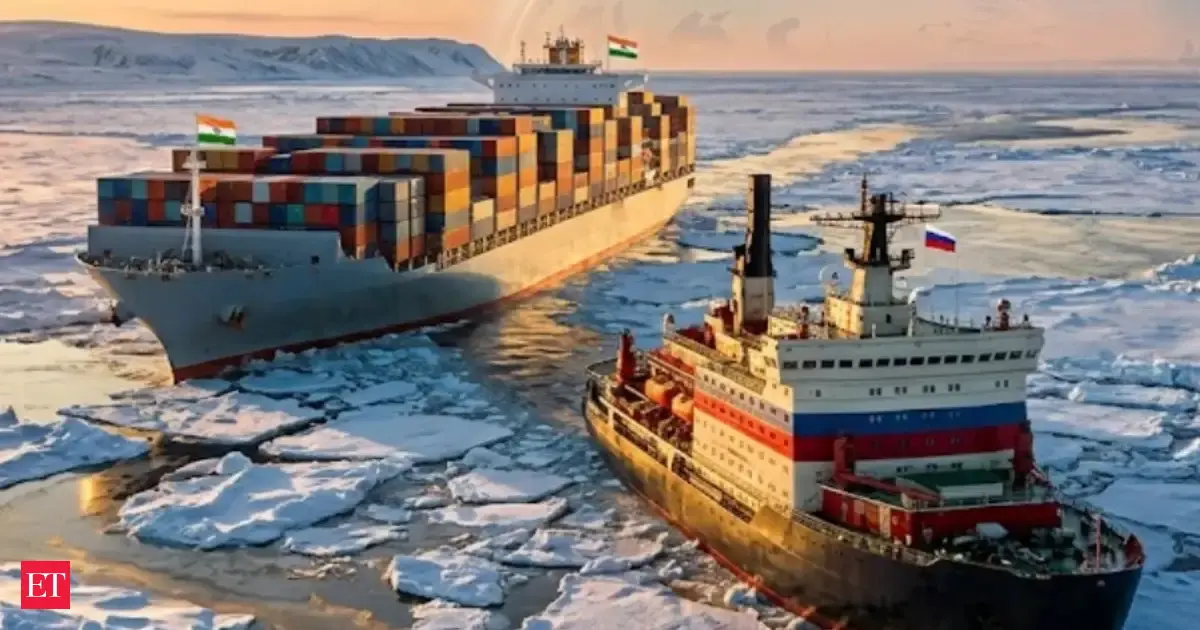
India and Russia are expanding cooperation on the Northern Sea Route, an Arctic shipping corridor that could reshape cargo movement between Asia and Europe. The effort comes as geopolitical strains continue to disrupt established trade lanes and push governments and businesses to look for more resilient supply chain options.
For India, the route is being viewed as a possible alternative to the Suez Canal for some shipments. A functioning Arctic corridor could reduce overall sailing distances and cut travel times for goods, making trade flows faster and potentially more efficient in selected sectors.
Russia, meanwhile, has a strong interest in developing the Northern Sea Route as it seeks to diversify trade and transport links. Closer coordination with India fits into Moscow's broader goal of building new commercial pathways and attracting long-term partners to one of its most strategically important maritime projects.
The deeper alignment reflects how global trade is adapting to a changing geopolitical environment. While the Northern Sea Route still faces practical and strategic challenges, growing India-Russia engagement shows that both sides see long-term value in the Arctic passage as part of future shipping and supply chain planning.