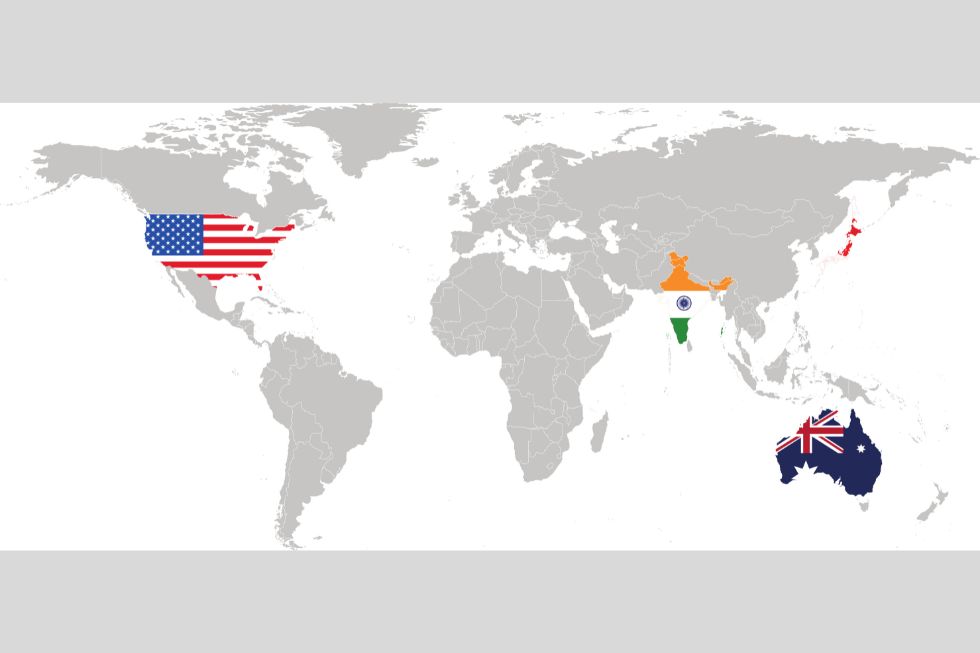
US Secretary of State Marco Rubio’s recent visit to India has revived questions about the future of the Quadrilateral Security Dialogue, or Quad, made up of Australia, India, Japan and the United States. Much of the discussion has focused on whether the grouping has slowed in recent years or lost some of the urgency that once defined its Indo-Pacific agenda.
But the broader argument now emerging is that the Quad may not be fading at all. Instead, its strategic purpose could be changing. As suggested by the debate around the group, the Quad’s mission may be expanding beyond its original Indo-Pacific frame toward a wider zone that includes the Gulf and other connected theaters of strategic importance.
That shift matters because the Indo-Pacific and the Gulf are linked by trade, maritime routes and larger geopolitical competition. If policymakers increasingly view these regions as part of one strategic continuum, the Quad could take on a broader diplomatic and security role than many observers expected. In that sense, questions about lost momentum may actually reflect a transition in priorities rather than a decline.
Rubio’s India visit has therefore become a useful marker in this discussion. It highlights India’s central place in the grouping and underscores how the United States and its partners may be rethinking the Quad’s relevance in a changing international environment. Rather than disappearing, the dialogue appears to be entering a new phase shaped by a wider strategic map stretching from the Indo-Pacific to the Gulf.