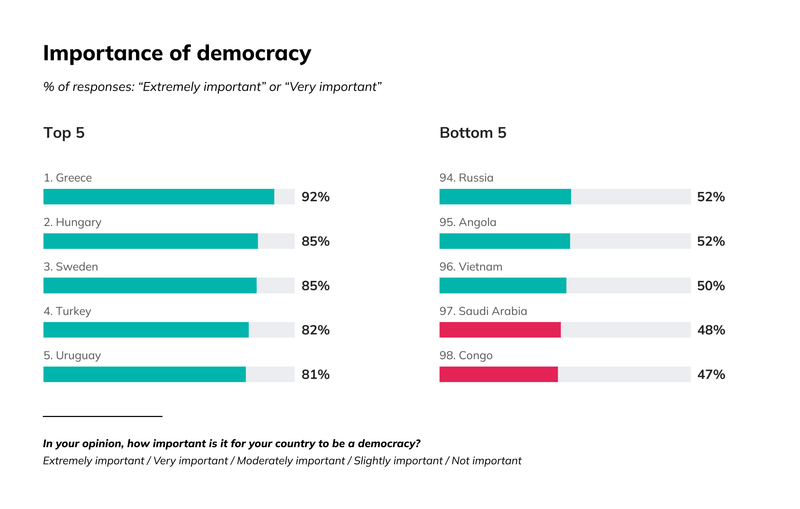
The Democracy Perception Index 2026 is presented as a wide-reaching global survey, covering more than 90% of the world’s population. According to the article, its findings cut against many of the ideas that shape mainstream Western foreign-policy thinking, especially assumptions about how the United States and its allies are seen abroad.
At the center of the piece is the argument that Western powers, and the US in particular, often describe themselves as defenders of democracy while much of the world views their conduct through a very different lens. The article frames this gap as a major reason why Western influence is increasingly questioned rather than accepted.
The broader theme is that a history of intervention, dominance, and imperial behavior has left many countries alienated from the West. Instead of seeing Western policy as neutral or benevolent, the article suggests many people interpret it as self-interested and selective, especially when democratic values are invoked unevenly.
By pointing to survey results that challenge familiar narratives, the piece argues that Western governments may be misreading global opinion. Its central message is that foreign-policy credibility depends not just on rhetoric about democracy, but on whether the rest of the world believes those principles are applied consistently.