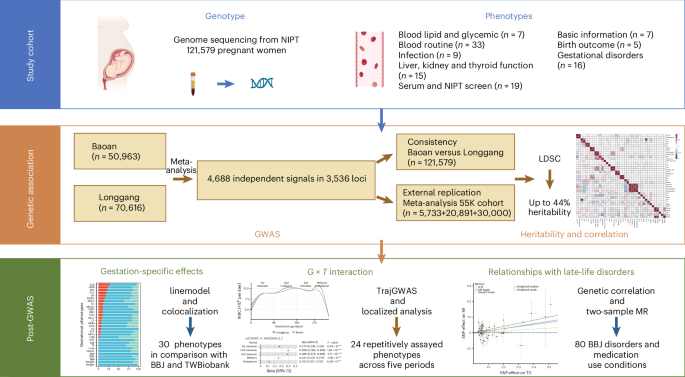
Researchers have reported a large genetics study of pregnancy-related traits in China, using genome-wide analysis data from as many as 121,579 pregnant women. The work examined 111 gestational phenotypes, making it one of the broader efforts to track how inherited variation may relate to changes seen during pregnancy.
A central finding is that some genetic signals appear to be specific to pregnancy rather than constant across all stages of life. The study also points to interactions between genetic effects and gestational timing, suggesting that the influence of certain variants may rise or fall depending on when in pregnancy a trait is measured.
That timing element is important because pregnancy is a dynamic biological period, with rapid shifts in hormones, metabolism and fetal development. By looking across many phenotypes instead of a single outcome, the analysis aims to show a more detailed picture of how maternal genetics may connect to different aspects of gestation.
The findings add to a growing body of research on reproductive and maternal health in China and may help guide future studies on risk prediction and pregnancy biology. Based on the description available, the study’s main contribution is identifying context-specific genetic effects that are tied to particular gestational traits and stages of pregnancy.