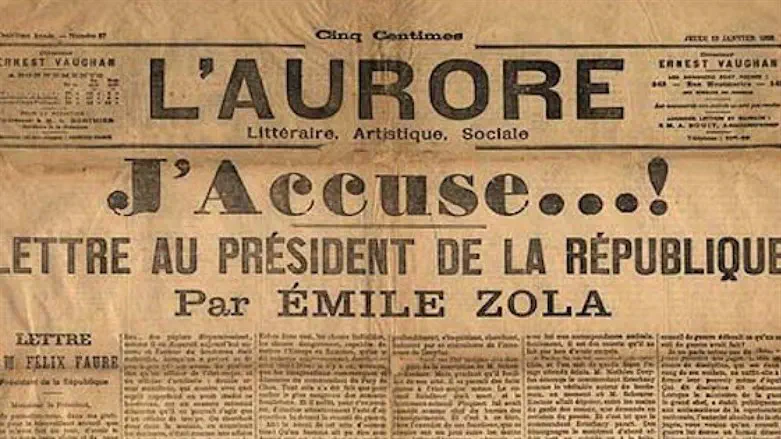
This opinion piece uses the Dreyfus affair as a historical warning while criticizing Mayor Mamdani's stance toward Israel and Jewish issues. Drawing on the 1894 case of Alfred Dreyfus, the article argues that public accusations can be shaped by prejudice while still presenting themselves as moral or political judgment.
The writer says the pattern seen in the Dreyfus affair is relevant today because antisemitism can reappear in more modern language. In that framing, the article contends that Israel, the Jewish people and Israel's elected leader are being treated as collectively suspect rather than assessed fairly as separate political actors.
Émile Zola's famous intervention in defense of Dreyfus is invoked as a symbol of speaking out when bias is disguised as justice. The op-ed suggests that what is often described as political criticism can, in some cases, slide into a broader condemnation of Jews and the Jewish state.
Overall, the essay presents Mayor Mamdani as a central figure in that debate and argues that New York politics is becoming a stage for rhetoric the author sees as historically familiar. Its main point is that the Dreyfus analogy is not about a literal repeat of history, but about the danger of turning old antisemitic patterns into acceptable public discourse.