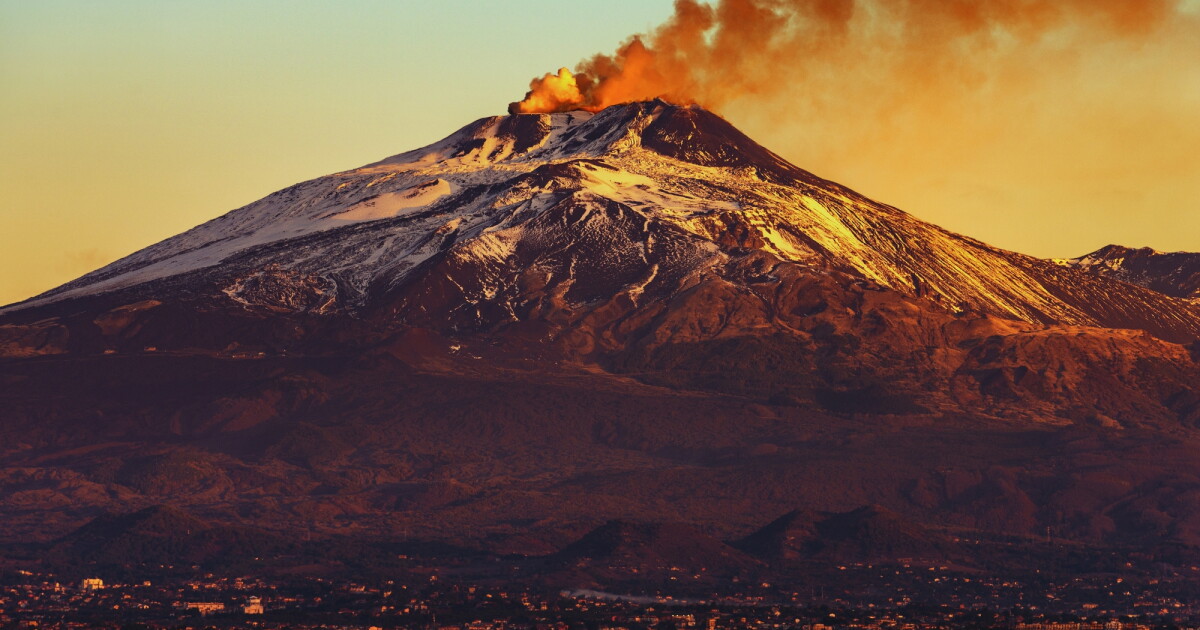
Mount Etna, the towering volcano on the Italian island of Sicily, has long stood out as one of the most closely watched volcanic systems in the world. It erupts frequently, rises above 3,000 meters, and has drawn scientific attention for decades. Even with that level of study, Etna has remained difficult to fully explain.
The latest reporting suggests researchers now think Etna may not fit neatly into the usual patterns used to describe volcanoes. That is a notable claim because Etna is already famous as Europe’s most active volcano, with repeated eruptions each year and a landscape shaped by fresh lava, ash, and glassy summit features.
What makes the story important is not just Etna’s activity, but the idea that its underlying geology may be unusually complex. Scientists have long treated it as a puzzle, and the new work appears to strengthen the case that the Sicilian volcano behaves in ways that set it apart from many others on Earth.
If that view holds up, Mount Etna could become even more significant for volcanology. A volcano that does not follow familiar rules can help researchers rethink how magma moves, how eruptions develop, and why some volcanic systems are harder to classify than others. For now, Etna remains both a natural spectacle and one of geology’s most intriguing mysteries.