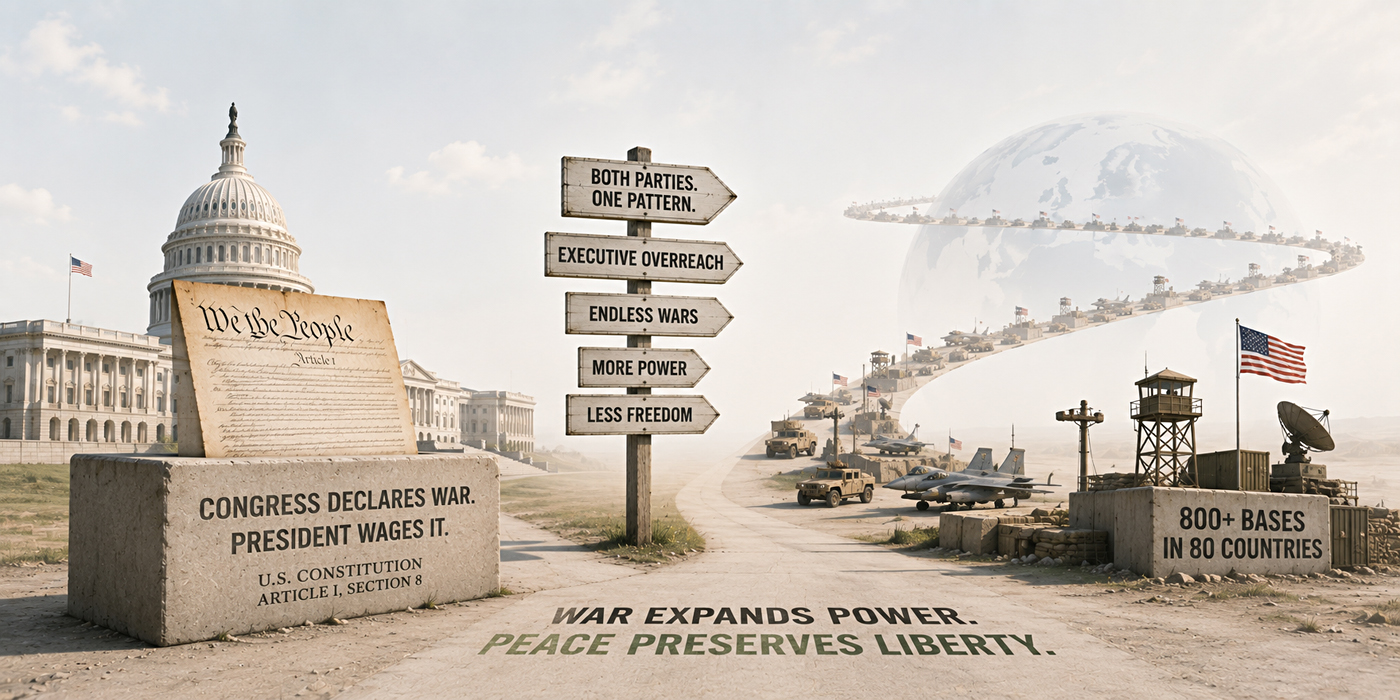
A growing debate over Congress war powers and the American presidency focuses on whether the United States has drifted away from the Constitution’s original design. The core issue is simple: the Constitution gives Congress, not the president, the authority to declare war, making lawmakers responsible for the decision to send the country into armed conflict.
The article argues that this constitutional balance has weakened over time. In its view, modern American government has allowed presidents to take on a larger role in launching or continuing military action, while Congress has increasingly failed to assert its own authority. That shift, the piece suggests, is one of the clearest institutional failures in Washington.
By concentrating war-making power in the executive branch, the presidency has become more dominant in national security decisions than the framers intended. The article links that trend to the idea of perpetual war, arguing that military involvement can continue more easily when congressional approval is no longer treated as the central requirement.
At the heart of the discussion is a constitutional and political question: whether Congress will reclaim its role in authorizing war or continue to defer to the White House. The article presents that erosion of congressional power as a defining feature of the modern presidency and a major reason the United States remains locked in repeated military conflict.