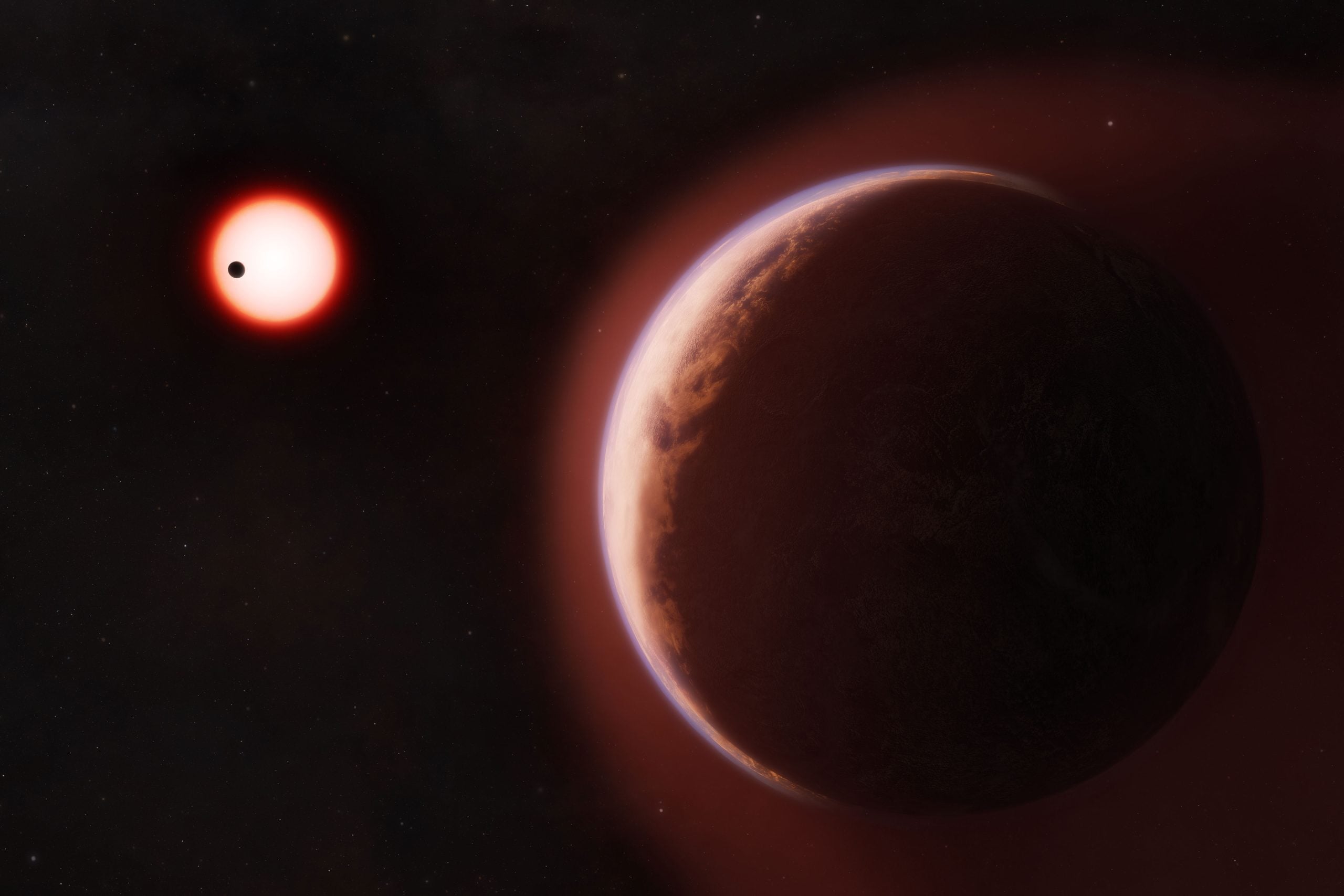
Astronomers have identified evidence of an atmosphere around LHS 1140 b, a rocky exoplanet described as potentially Earth-like. The finding stands out because detecting atmospheres around smaller, solid worlds is far more difficult than studying the thick gas envelopes of larger planets.
The key signal came from helium. Researchers observed a faint flow of helium escaping from the planet, which suggests that LHS 1140 b is surrounded by a gaseous layer rather than being a bare, airless world. That makes the planet especially interesting in the broader effort to understand which distant rocky planets might be able to support life-friendly conditions.
The system also appears to include another nearby rocky planet orbiting the same cool red dwarf star. In that setting, LHS 1140 b becomes an important target for follow-up work, because astronomers can compare worlds in the same planetary neighborhood while looking for signs of atmospheric chemistry and long-term stability.
While the discovery does not mean life has been found, it marks a major step in exoplanet science. Confirming an atmosphere on a world in the Earth-like category gives researchers a stronger path forward as they search beyond the solar system for planets that may share some of the traits needed for habitability.





