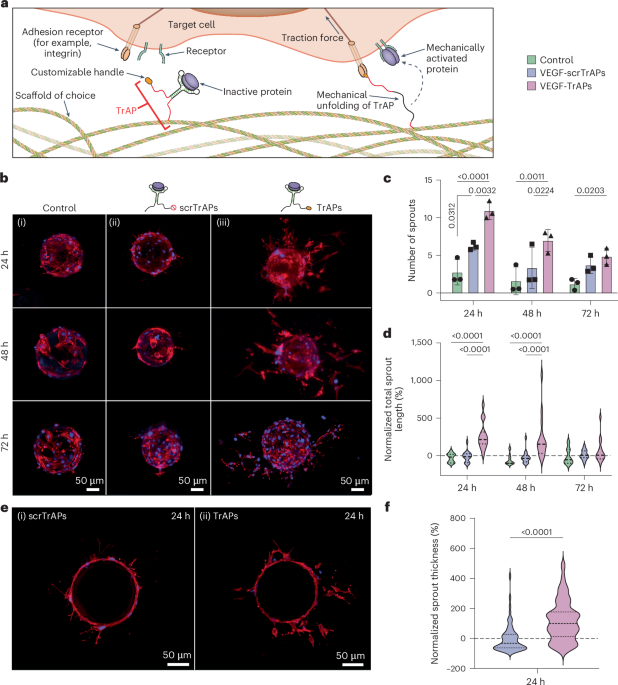
New research highlighted by Nature describes a force-responsive biomaterials approach to tissue repair that relies on the body’s own signaling molecules rather than large amounts of added therapeutics. The strategy uses aptamer constructs attached to biomaterial scaffolds to capture endogenous growth factors from cells and injured tissue, then make those factors available in a cell-activated way.
In simple terms, the scaffold is designed to harvest growth signals already present at a repair site and deliver them when cells interact with the material. According to the description, this allows the biomaterial to influence cell behavior at physiologically relevant doses, which could be important for making tissue repair more controlled and more biologically aligned.
The concept stands out because it aims to work with natural repair mechanisms instead of overwhelming tissue with externally supplied growth factors. By combining aptamers with a scaffold, the material can potentially act as both a collector and a responsive delivery platform, helping direct regenerative activity where it is needed.
The trimmed article snippet also indicates that the work involved human skin tissue collected with informed consent and ethics approval from the Imperial College Research Ethics Committee. While the full study details are not available in the excerpt, the report points to a biomaterials platform built to harness endogenous growth factors as a targeted way to support tissue healing.