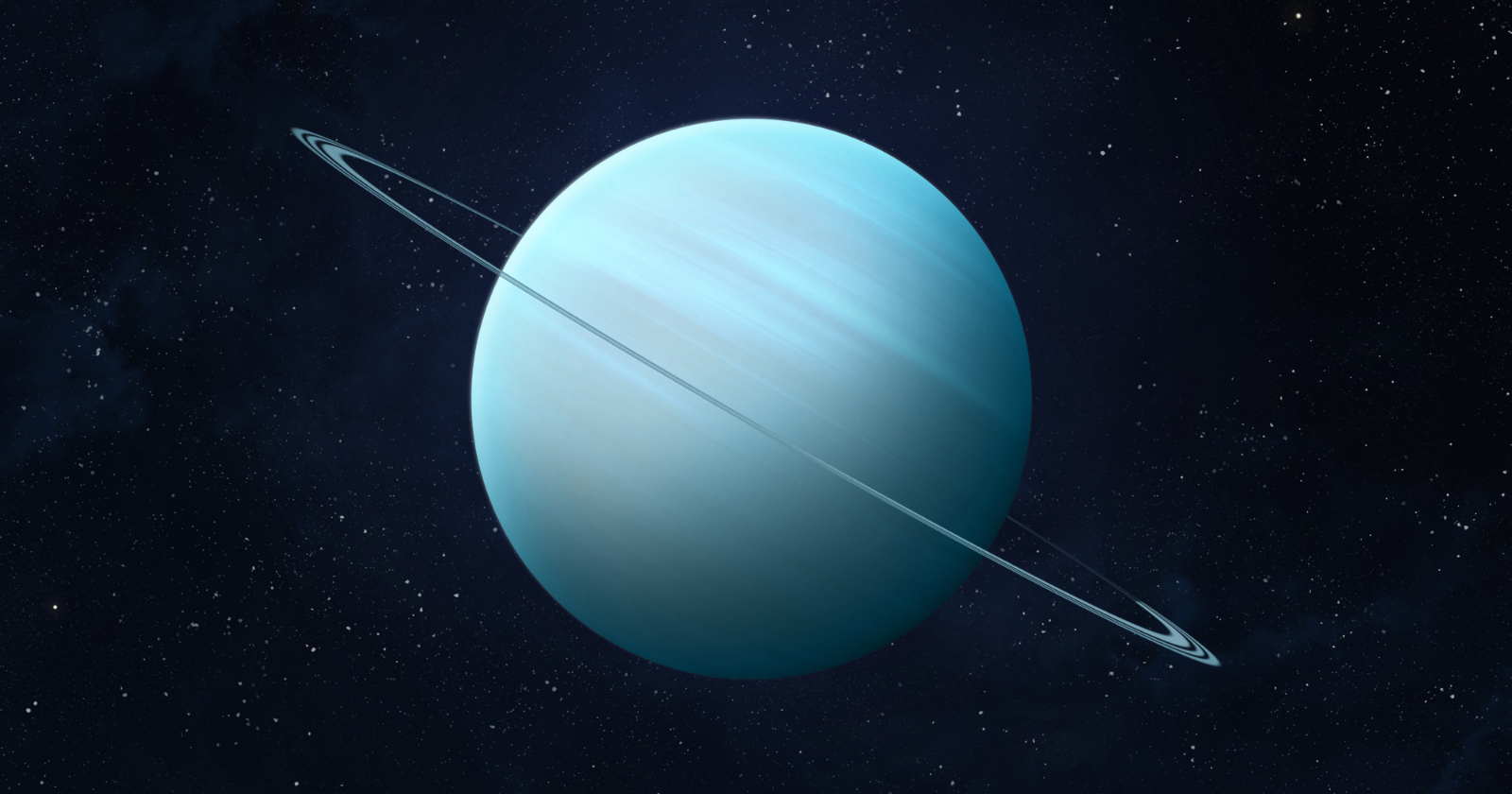
Uranus stands out in the solar system because it is tilted so dramatically that it does not spin upright like most planets. Instead, it is often described as rolling around the Sun. That unusual orientation produces one of the strangest seasonal patterns known: each pole can spend about 42 years in constant sunlight, followed by roughly 42 years in continuous darkness.
This means the Sun can remain above the horizon at a pole for decades without setting. Eventually, the light fades and that same region enters an equally long stretch of night. Rather than the daily cycle people know on Earth, Uranus experiences a much slower and more extreme rhythm tied to its severe tilt and orbit around the Sun.
The result is not just long days and nights, but brutal seasonal contrasts. With sunlight hitting the planet in such an uneven way over time, Uranus develops weather behavior unlike that of any other world in the solar system. Its atmosphere must respond to years of steady illumination and then years without it, creating highly unusual seasonal changes.
That combination of extreme tilt, prolonged polar light and darkness, and distinctive atmospheric effects is what makes Uranus so scientifically fascinating. While other planets have seasons, Uranus pushes the idea to an extraordinary level, turning its poles into places where daylight and darkness can each last for generations.





