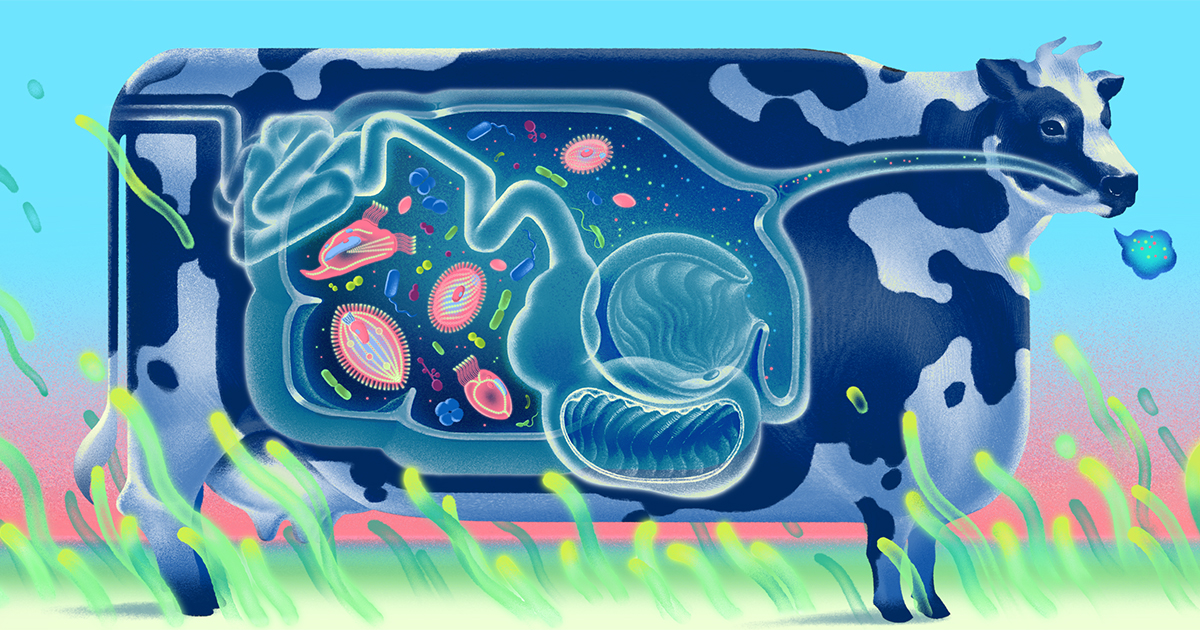
Researchers are getting a closer look at why cattle are such an important source of methane, a heat-trapping gas that contributes to global warming. The new insight centers on the rumen, the large fermentation chamber in a cow’s digestive system, where a dense community of microbes breaks down huge amounts of plant material every day.
According to the report, scientists identified an organelle inside one of those gut microbes. That finding matters because it helps connect the chemistry happening deep inside a cow’s microbiome to the methane that eventually leaves the animal in burps. In other words, the pathway from livestock digestion to atmospheric warming may depend on biological machinery at a much smaller scale than previously appreciated.
The discovery adds another layer to the idea that a cow is really an ecosystem made of many nested parts: the animal, the rumen, the microbes living there and now a specialized structure inside at least one microbe. By tracing methane-related processes down to that level, researchers can better explain how ordinary feeding and fermentation in livestock translate into climate effects.
The broader significance is that understanding the inner workings of the rumen could improve efforts to reduce emissions from agriculture. If scientists can pinpoint exactly how methane-producing activity is organized inside gut microbes, that could sharpen future strategies aimed at lowering livestock’s impact on Earth’s atmosphere.