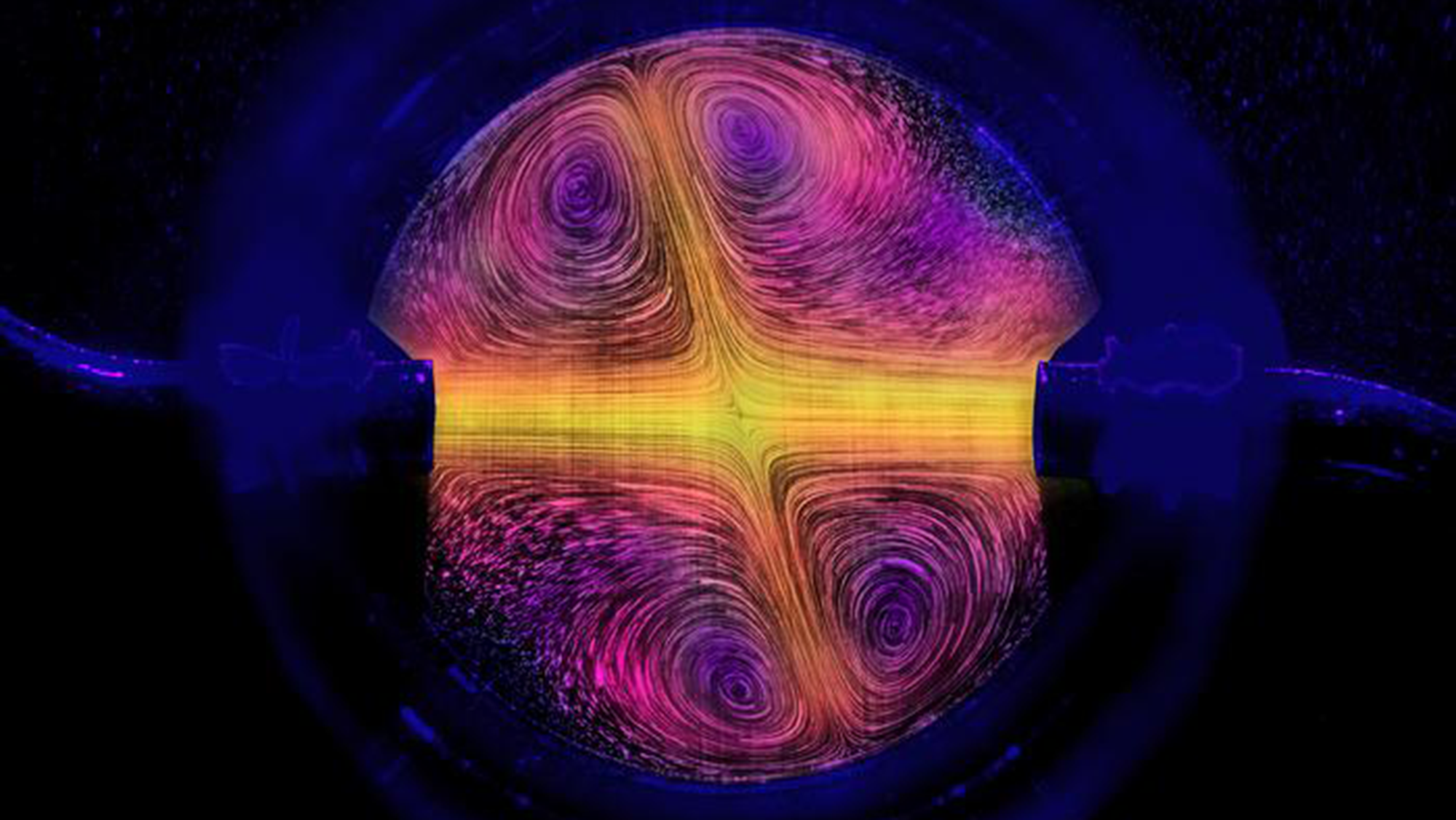
Physicists say they have finally clarified the behavior of the so-called reverse sprinkler, a device that draws water inward instead of spraying it outward. The question has lingered for decades because the sprinkler still turns, even though the flow direction is reversed, creating a long-running puzzle in fluid physics.
The problem became widely linked to Richard Feynman, whose interest in the odd setup helped turn it into a famous scientific debate. For years, researchers and physics enthusiasts argued over what should happen when water is sucked into the arms of a sprinkler and whether the device should rotate at all.
According to the new work, scientists have now identified the reason the sprinkler spins in this inward-flow case, challenging the older explanation associated with Feynman. That makes the result notable not just for settling a niche mechanics problem, but also for revisiting one of the best-known thought experiments in modern physics culture.
The finding closes in on a question that has divided physicists for nearly a century and shows how even simple-looking systems can hide subtle behavior. In that sense, the reverse sprinkler remains a reminder that basic questions about motion, forces and flowing water can still produce surprising answers.