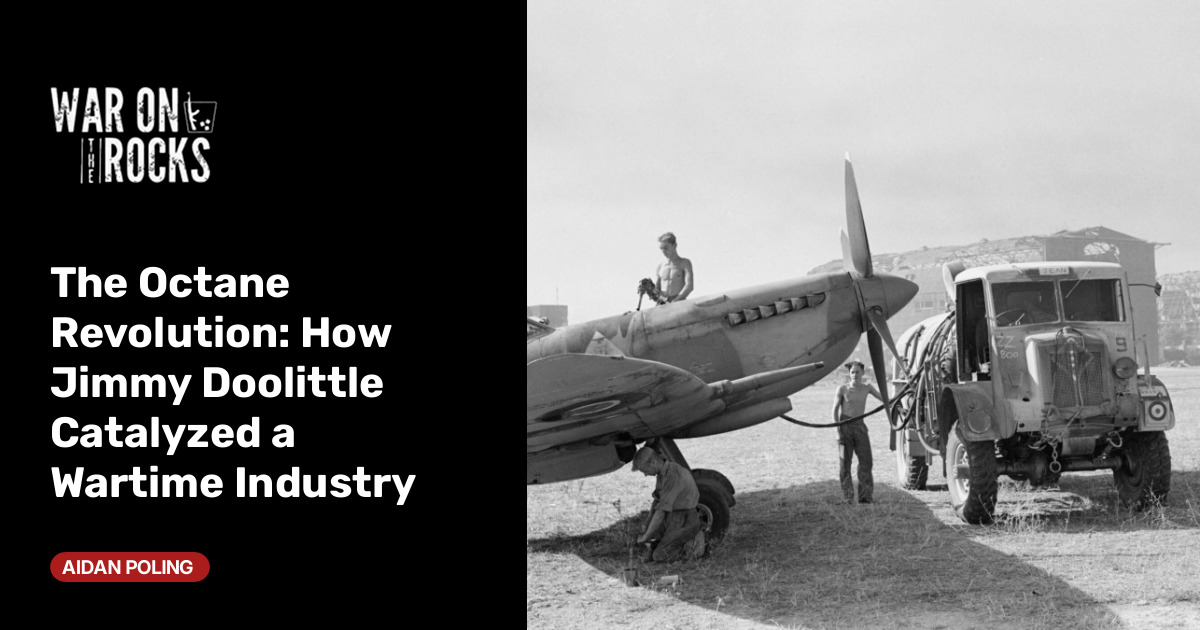
This installment in a broader series on American defense innovation examines how Jimmy Doolittle helped spark an octane revolution during wartime. At its core, the story connects one figure in military aviation to the rise of high-octane fuel as a strategic technology, showing how a technical change in fuel could influence the scale and effectiveness of wartime air power.
The article’s focus is not just on chemistry or engines, but on industry. By framing octane as a wartime breakthrough, it points to the way military demand can rapidly expand production capacity and create an entire industrial ecosystem around a single need. In that sense, the growth of high-octane fuel was both a scientific achievement and a manufacturing transformation.
The piece also places the octane story in a larger national context. As part of a series on defense technologies born from war, it highlights how innovations developed for military use can shape broader questions of national security, politics, and society. Fuel, in this telling, becomes more than a battlefield input; it becomes a case study in how war can redirect research, investment, and state-industry cooperation.
By centering Jimmy Doolittle in that process, the article underscores how leadership and advocacy can accelerate technological change. The result is a historical look at how wartime aviation needs helped build a major American industry whose effects extended well beyond the conflict itself.