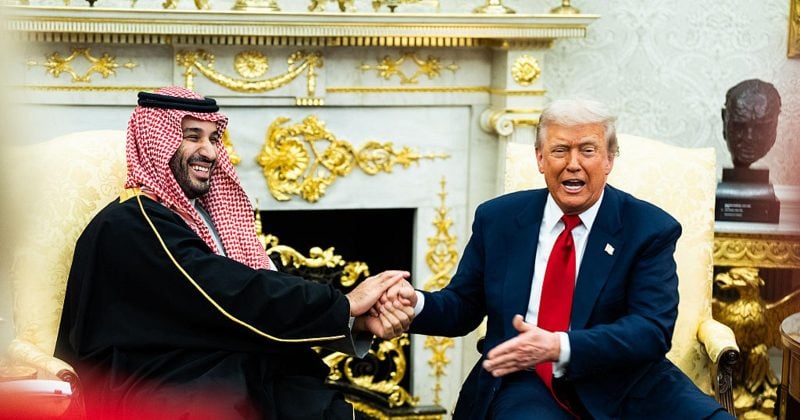
The US government has clarified that its proposed civil nuclear agreement with Saudi Arabia would not include the export of uranium enrichment technology. That point appears central to Washington’s effort to answer concerns about nuclear proliferation while still advancing a long-term energy partnership with Riyadh.
According to the available details, the framework is a 30-year civil nuclear cooperation agreement designed to give American companies a leading role in any future Saudi nuclear development. By explicitly excluding enrichment technology transfers, the deal draws a line between civilian energy cooperation and the more sensitive capabilities that can raise international security concerns.
The arrangement reflects a broader balancing act. Saudi Arabia is seeking to expand its energy options, while the United States is trying to support commercial opportunities for US firms without weakening nonproliferation standards. That makes the structure of the deal as important as the commercial opportunity itself.
Even with that clarification, implementation may not be straightforward. Geopolitical tensions and regional sensitivities could slow progress, and the outcome may be watched closely beyond diplomacy because of its potential effects on energy markets and wider investor sentiment.