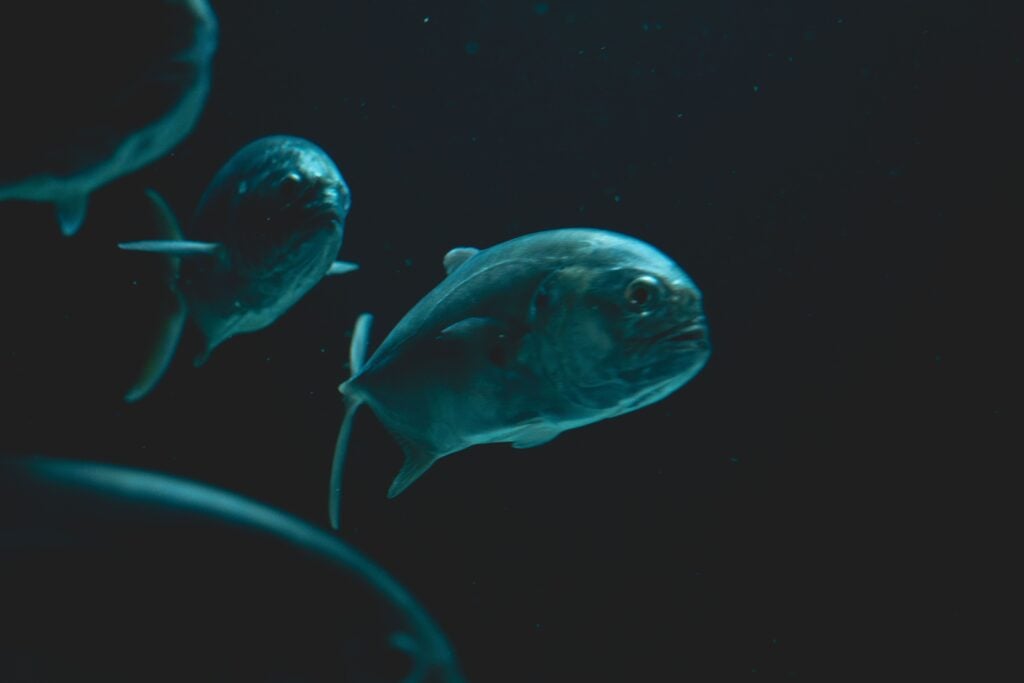
A deep-ocean observation south of Japan is drawing attention to one of the harshest habitats on Earth. In August 2022, a baited camera was sent into the Izu-Ogasawara Trench and recorded a small juvenile snailfish at a depth of 8,336 metres, placing the animal in an environment of crushing pressure and extreme cold.
The finding highlights a basic scientific puzzle: how a fish can function so far below the surface, where water pressure is immense and normal biological processes would be expected to struggle. The conditions described in the report are so severe that the stability of proteins and the general workings of animal tissues become a central question.
Researchers point to evolution as the reason such a creature can exist at all. Rather than being a fish merely tolerating the deep ocean, the snailfish appears to be specialized for it, with a body adapted to water that is both dense and unforgiving. The observation was later described in a Deep-Sea Research paper, adding to growing interest in how vertebrate life reaches its limits in the deepest parts of the sea.
Beyond the single sighting, the juvenile snailfish offers a vivid example of life adapting to places once thought nearly uninhabitable. Its appearance in the Izu-Ogasawara Trench underscores how much remains to be learned about deep-sea ecosystems and the biological changes that allow animals to survive under such extraordinary pressure.