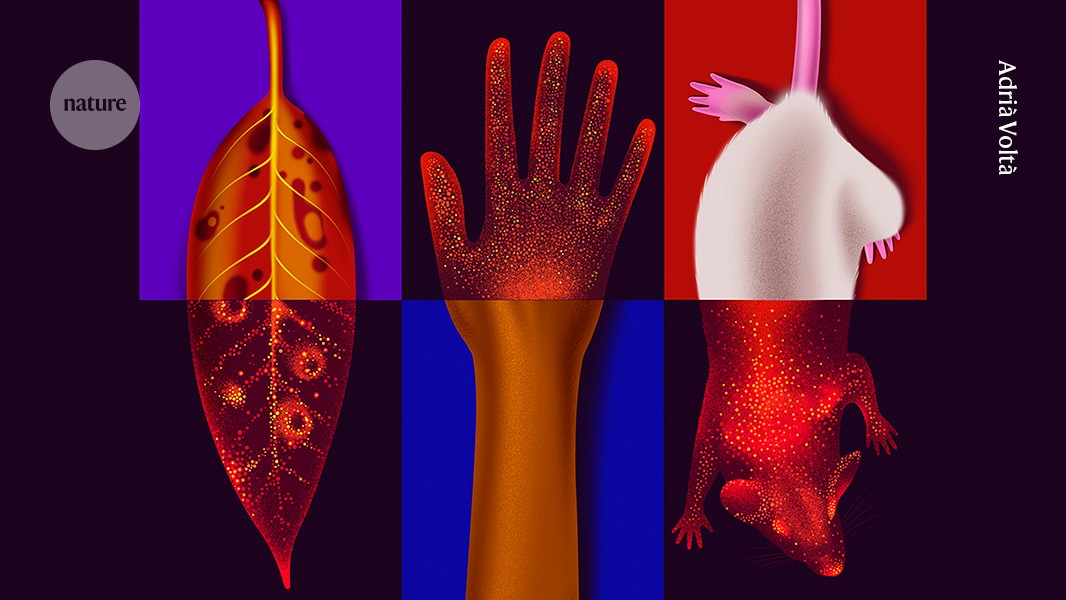
Scientists are paying closer attention to an unusual phenomenon: all living things appear to give off an extremely faint light. These emissions, often called ultra-weak biophotons, are far too dim for the human eye to see, but researchers say they could offer a new way to study health and biology.
Interest in the topic grew after quantum physicist Daniel Oblak and colleagues published images in 2025 showing mice inside a dark chamber. The work highlighted that living organisms can produce measurable light signals under carefully controlled conditions, turning a little-known effect into a wider scientific conversation.
Researchers are now exploring whether this faint glow could be useful in medicine. If patterns in biophoton emissions change when tissue is under stress or affected by illness, the light could potentially become a non-invasive clue for diagnosing disease. That possibility remains an active area of study, but it has drawn attention because it could reveal biological changes without relying on stronger external probes.
Another open question is whether biophotons are simply a by-product of normal cellular activity or part of a more meaningful process inside the body. Some scientists are considering whether the light might reflect a previously overlooked signalling mechanism in cells. For now, the idea is still being investigated, but the research suggests that the faint glow of life may contain more information than once thought.





