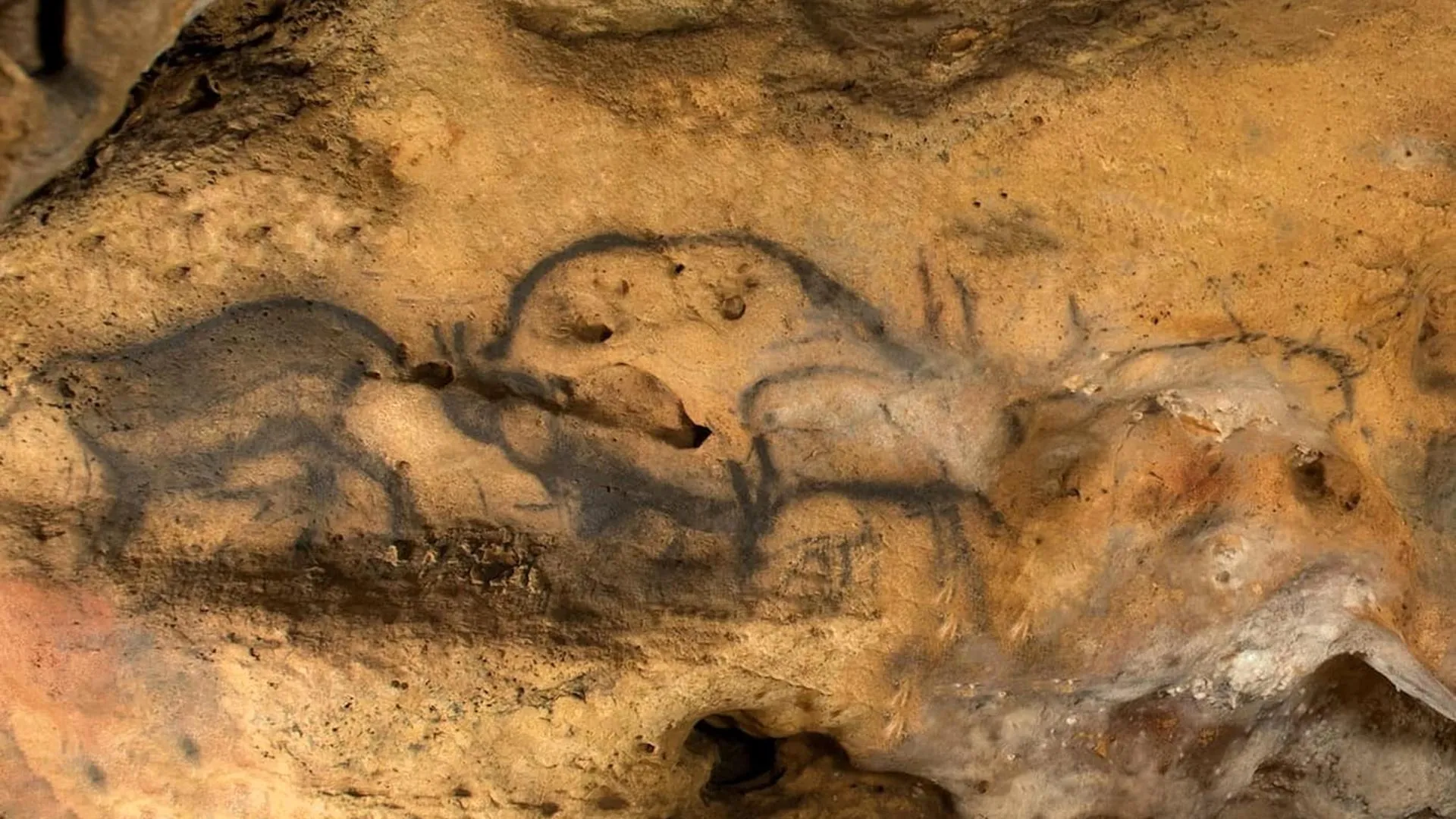
Scientists have, for the first time, established a precise age for prehistoric paintings inside Font-de-Gaume, a major decorated cave near Les Eyzies in Dordogne, southwestern France. The advance comes from a new analysis of the cave’s black pigments, which had long been considered mineral-based and therefore difficult to date directly.
Researchers found that the pigment also contained tiny traces of charcoal. That hidden organic material made it possible to apply radiocarbon dating, offering a much clearer timeline for art in the cave. The finding is important because direct dating of cave paintings is often challenging, especially when pigments appear to lack carbon.
According to the study summary, the results provide the first accurate date for at least one of Font-de-Gaume’s animal images, including a bison figure. This helps place the artwork more securely within prehistoric chronology and gives archaeologists a stronger basis for comparing it with other Ice Age cave art in France.
Beyond the date itself, the research shows how re-examining well-known sites with newer methods can change what experts think they know about ancient materials. In the case of Font-de-Gaume, charcoal hidden inside black paint has opened a new way to understand when some of the cave’s most famous images were created.





