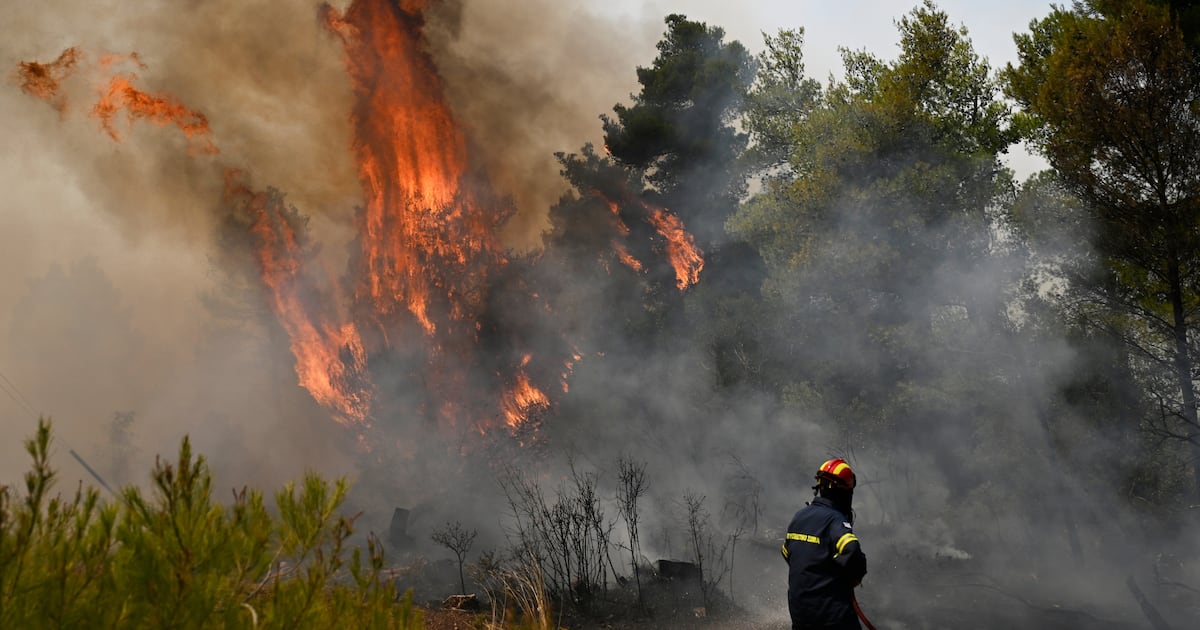
Wildfire coverage often highlights the most visible and immediate parts of a fire, but it does not always spell out the climate connection. The issue is not that climate change is unrelated; it is that news reporting on fast-moving disasters often favors simple, near-term explanations over slower and more layered ones.
The article points to how a wildfire can be understood across very different timescales. One explanation may focus on a recent human action, such as a barbecue. Another may look at yesterday’s wind direction, a dry spring, decades of land use change, or even a century of emissions. All of those factors can shape wildfire risk, but not all of them fit easily into a breaking-news story.
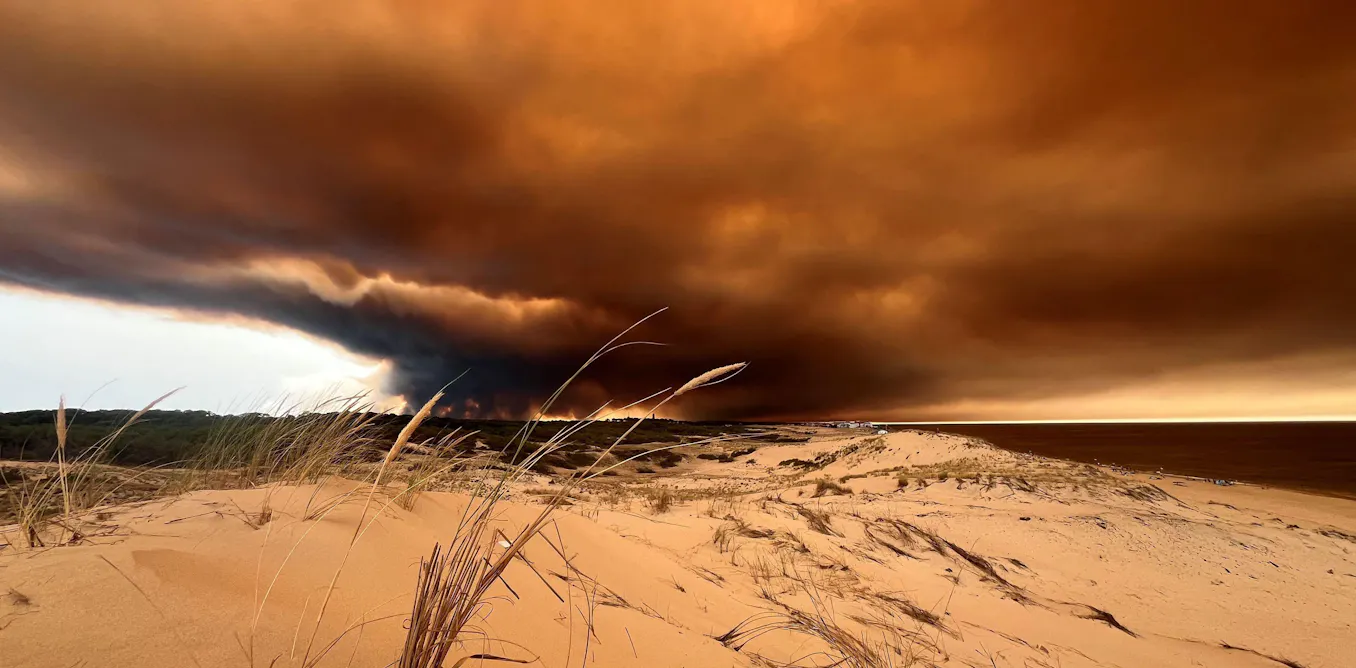
A front-page image mentioned in the piece, showing beachgoers under a striped parasol near Lacanau in southwest France, illustrates how wildfire reporting can center on the immediate scene. Such coverage captures the drama and contrast of the moment, yet it may leave less room for the slower background conditions that made the fire more likely or more intense.
The broader point is that wildfire reporting can become too narrow when it treats each blaze as a single event with a single cause. Immediate triggers matter, but so do long-term environmental change, land use decisions and accumulated emissions. Understanding wildfires fully means seeing how those short-term and long-term causes work together.