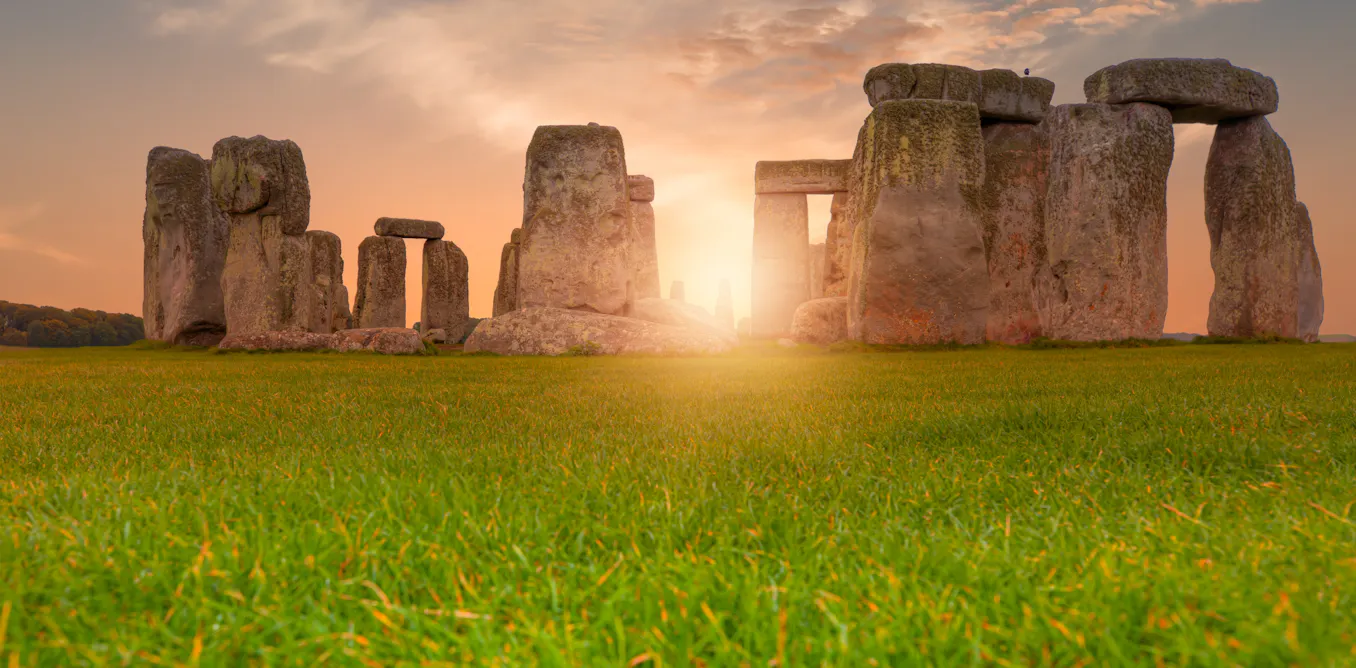
A new theory about Stonehenge is focusing on one of the monument’s biggest mysteries: how a six-tonne rock could have traveled from Scotland thousands of years ago. Instead of assuming the stone was hauled the entire distance by people, the idea suggests that glacial movement may have carried it much of the way.
The debate matters because Stonehenge was built with stones weighing roughly 2 to 25 tonnes, a huge engineering challenge for a prehistoric society. The scale of the monument has long fueled questions about what tools, landscapes and natural forces may have helped bring such massive material to the site.
If a glacier did transport one of the stones, it would reshape part of the story of how Stonehenge was assembled. Rather than removing human effort from the picture, the theory would shift attention to how ancient builders may have used stones that were already moved closer by natural processes.
Stonehenge has fascinated generations because it sits at the meeting point of archaeology, geology and myth. This latest glacier theory adds another layer to that fascination by revisiting how at least one enormous rock may have made its journey from Scotland to one of the world’s most famous prehistoric monuments.