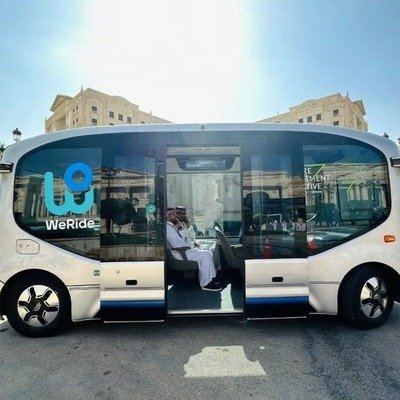
Chinese autonomous buses are emerging as a visible sign of how global industrial leadership is shifting in the 21st century. Where the United States once set the pace for many consumer and transportation technologies, China is increasingly showing strength in advanced vehicle production, including self-driving public transit.
The spread of these buses suggests that Chinese companies are no longer focused only on making large volumes of hardware. They are also pushing into sophisticated systems that combine vehicle manufacturing with automation, software, and modern mobility design. That makes autonomous buses an important example of how transportation technology is changing.
As these vehicles appear in more markets, they reflect a broader pattern: China is becoming more competitive in sectors once associated with Western industrial dominance. Autonomous buses are especially notable because they sit at the intersection of infrastructure, urban mobility, and artificial intelligence, giving them outsized symbolic and practical importance.
The bigger takeaway is not just that driverless buses exist, but that Chinese-made versions are gaining international visibility. Their expansion points to a future in which the next generation of transit technology may be designed, built, and exported from China rather than from the countries that led earlier industrial eras.