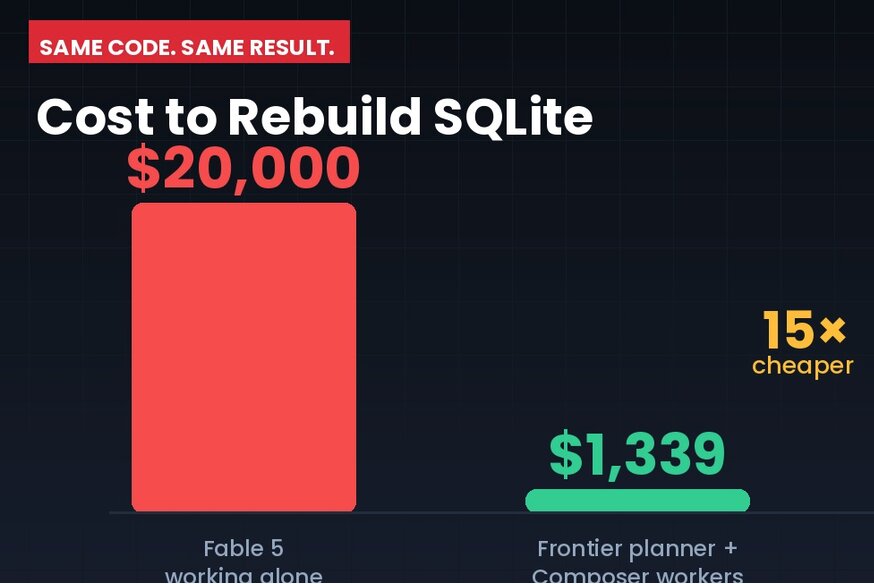
Cursor’s growth appears tied to a simple idea: not every coding task needs the most expensive AI model. In AI programming tools, users are effectively paying for tokens, the units of text a model reads and produces. Premium models can be costly on a per-token basis, while smaller or less advanced systems are far cheaper.
That pricing gap matters for coding assistants because software work involves a large volume of prompts, context, edits, and generated output. If a product can reserve top-tier models for harder jobs and use cheaper models for routine steps, it can reduce costs while still delivering useful results to developers.
The basic comparison is similar to using different specialists for different parts of a project. High-end AI can handle more demanding reasoning, but lower-cost models may be enough for simpler coding tasks. That mix can improve margins for an AI coding company without requiring every request to run through the most expensive option.
For Cursor, the takeaway is that cheaper AI coding can become a business advantage, not just a product feature. As competition grows in developer tools, managing token costs and model selection may be just as important as adding new AI capabilities.