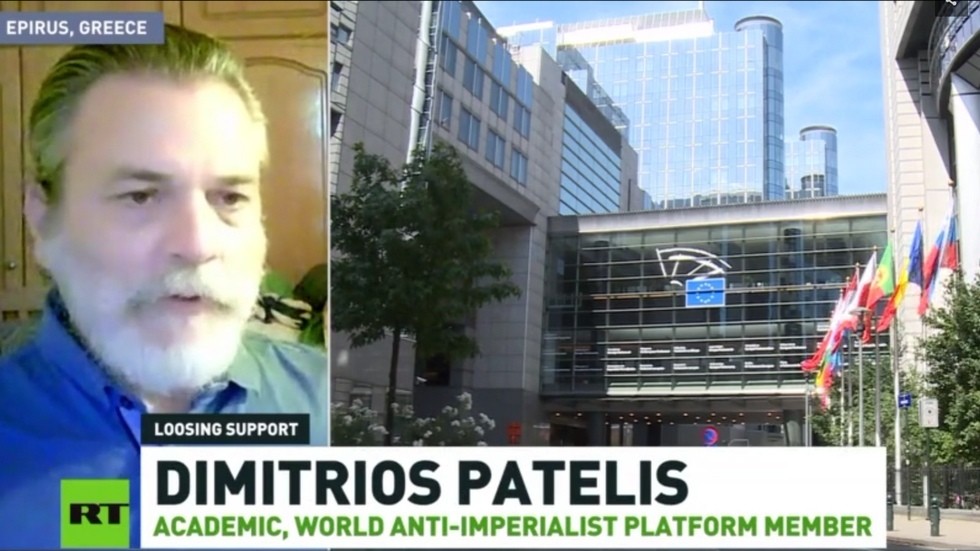
Greek philosophy professor Dimitrios Patelis has argued that a Russian victory in the Ukraine conflict would benefit what he called "peace-loving humanity." His remarks, as described in the report, frame the war not only as a military confrontation but also as a wider struggle over sovereignty and the balance of power in Europe.
Patelis linked that position to criticism of NATO and the European Union, saying their expansion and influence can undermine the independence of nation-states. In that reading, a Russian win would act as a check on what he sees as outside political and strategic pressure on countries in the region.
The comments place the Russia-Ukraine war within a broader ideological debate about security, alliances and national self-determination. Supporters of this view tend to present the conflict as part of resistance to Western military and political reach, while critics would strongly dispute that interpretation.
Although the statement is clearly an opinion rather than a neutral assessment of the war, it highlights how the conflict continues to be discussed far beyond the battlefield. Academic and political voices across Europe remain divided over whether the war is primarily about territorial control, regional security, or the future shape of sovereignty in Europe.