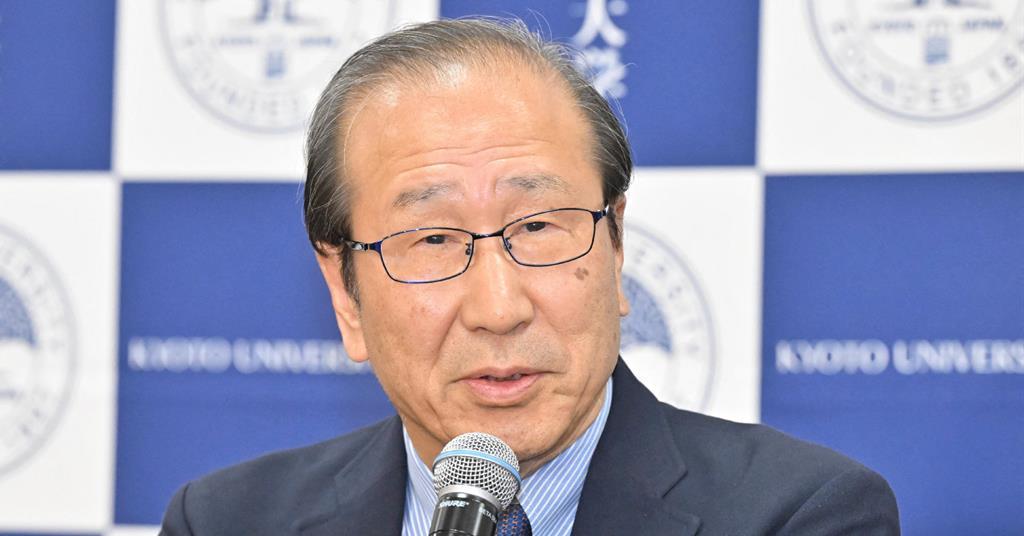
Chemistry Nobel laureate Susumu Kitagawa is urging a major rethink in how humanity finds and uses resources. Instead of relying mainly on extraction from the ground, he argues that future materials could help society harvest valuable substances that already exist around us, including in the air.
At the center of that vision are porous materials, which can be designed to separate and capture specific molecules. Kitagawa describes this approach as moving from a "digging civilisation" to a "separating civilisation" — a change that would depend on advanced chemistry rather than ever-deeper mining.
His idea frames the atmosphere and surrounding environment as a kind of "invisible gold": a diffuse but potentially useful source of raw materials. If suitable materials can be developed and scaled, they could open a new way to obtain what industry needs by selecting, trapping and recovering substances from mixed sources.
The concept points to a broader scientific challenge as well as an industrial one. It suggests that the next leap in resource technology may come not from discovering new deposits underground, but from creating smart materials capable of pulling value from the world already around us.