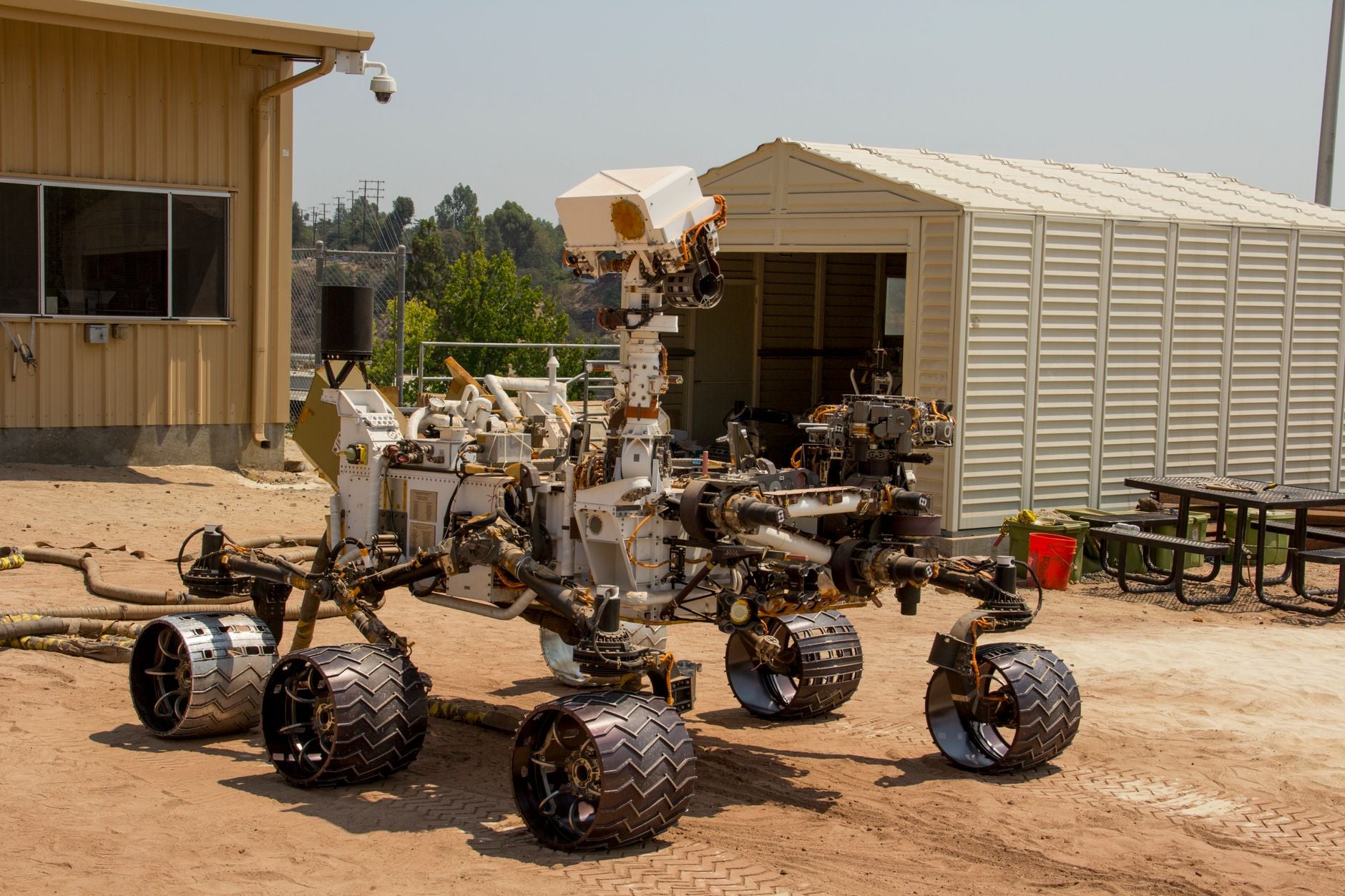
NASA’s MOXIE instrument, a device about the size of a toaster carried aboard the Perseverance rover, has shown that oxygen can be produced directly from the Martian atmosphere. Between 2021 and 2023, the system generated 122 grams of breathable oxygen, a small amount by Earth standards but an important milestone for future human exploration.
The result matters because Mars missions cannot easily bring every resource from Earth. By turning local air into usable oxygen, MOXIE demonstrated the basic idea that astronauts may eventually be able to make part of their own life-support supply on the planet instead of relying entirely on cargo launched from home.
The experiment also points to another major need beyond breathing. Oxygen would be essential for rocket operations as well, including any future effort to launch crews back off the Martian surface. That makes the test more than a science demonstration: it is an early step toward using Mars itself to support long-duration missions.
Although 122 grams is only a proof-of-concept level output, the achievement shows that the approach works in real Martian conditions. The next challenge for NASA and mission planners would be scaling that capability far beyond a laboratory-sized unit so it could support astronauts in a practical way.