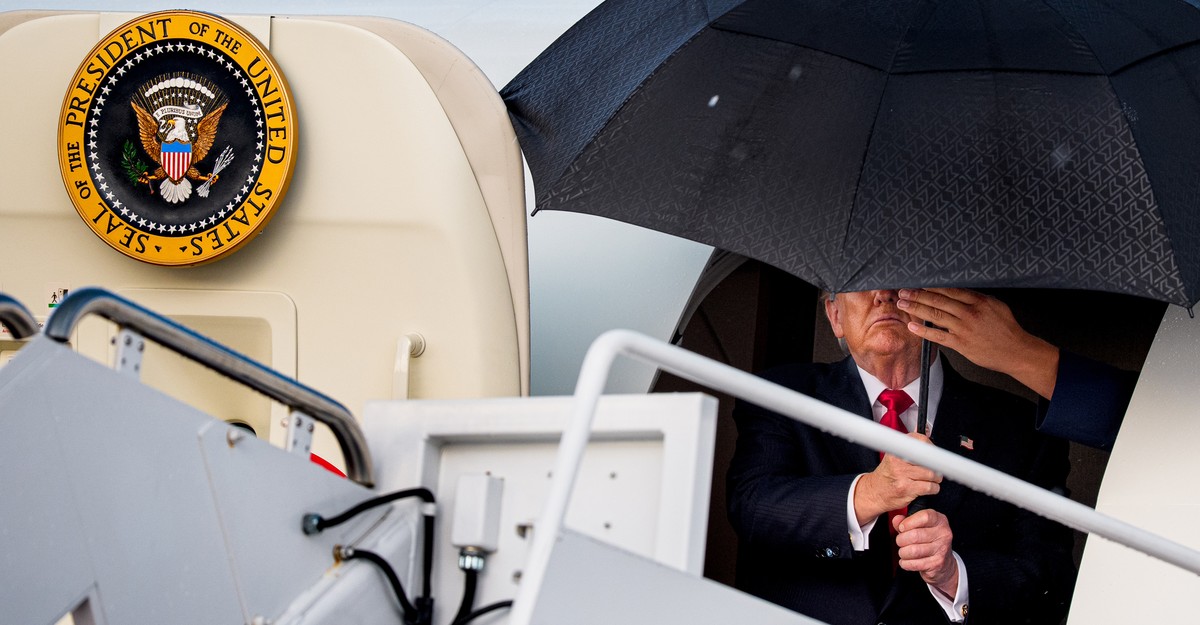
Donald Trump has often projected an image of unmatched authority, but the argument here is that political power has boundaries even for a president willing to test them. The piece presents Trump as a leader who has tried to reshape major parts of American policy, from military action to the country’s economic and strategic posture abroad.
That broad use of power is framed as colliding with reality. However sweeping a president’s ambitions may be, the office still operates within limits set by institutions, public opinion, events, and the practical consequences of major decisions. In that sense, the article suggests Trump is running into restraints that cannot simply be overcome by force of personality or demand.
The focus is not only on what Trump has already done, but on what comes next for his influence. The description points to a second challenge beyond formal limits on presidential power: the possibility that his relevance could diminish over time. That raises a larger question about how long any one political figure can dominate national life once circumstances begin to shift.
Taken together, the analysis portrays a presidency defined by maximal claims of power meeting the harder facts of governance. Trump may have sought to bend institutions and international relationships to his will, but the central point is that neither power nor political centrality lasts forever.