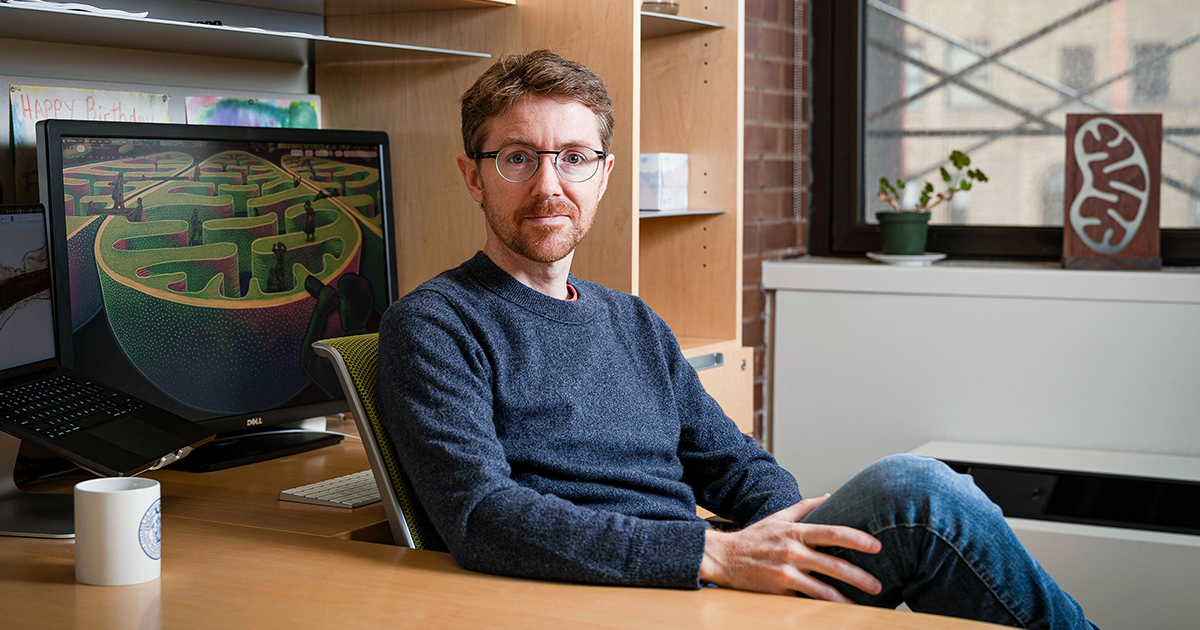
Biologist Martin Picard is drawing attention for a sweeping idea that places mitochondria at the center of how life is organized and experienced. His “energetic view of life” suggests that these organelles, best known for their role in cellular energy production, may help connect the workings of cells with overall health, mental states, and even the feeling of being alive.
The theory pushes beyond the standard view of mitochondria as simple power suppliers inside cells. In Picard’s framing, energy flow may be a deeper organizing principle that links the body and mind. That makes mitochondria a possible bridge between basic biology and larger questions about human experience, an approach that touches both health science and consciousness research.
The idea is generating interest in part because it aims to connect several fields that are often studied separately. By focusing on cellular energy, the theory offers a way to think about how physical processes in the body could influence complex outcomes in the brain and behavior. It also reflects a broader scientific effort to understand whether fundamental biological systems shape more than just metabolism and disease.
At the same time, the proposal remains debated. Not all researchers are convinced by the leap from mitochondrial function to consciousness, and molecular biologist José Antonio Enríquez of the Spanish National Center for Cardiovascular Research is among those urging caution. That skepticism highlights the central challenge for Picard’s theory: turning a bold, interdisciplinary idea into one that can be firmly supported by evidence.





