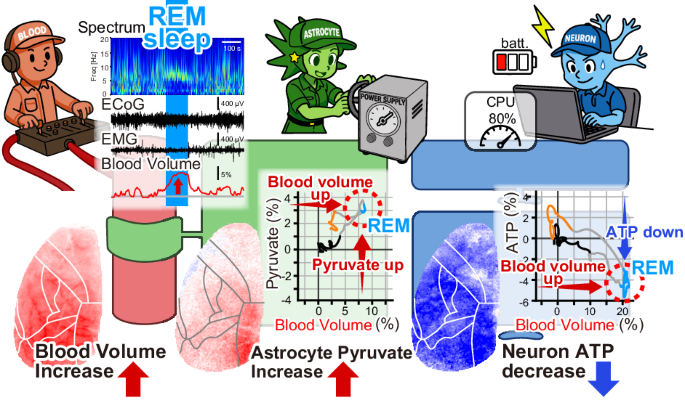
A new Nature study reports an unexpected pattern in brain energy use during REM sleep in mice. Using wide-field imaging to track state-dependent changes in the cortex, researchers found that some signs of energy supply increased during REM sleep even as a key marker of neuronal energy status moved in the opposite direction.
According to the study description, cortical blood volume rose during REM sleep, and astrocytic pyruvate also increased. At the same time, neuronal ATP fell. Together, those findings point to a paradox: the brain appears to receive more support for metabolism during REM sleep, yet neurons show reduced immediate energy availability.
The result suggests a dissociation between energy supply and energy consumption in the sleeping brain. Rather than moving in lockstep, vascular and metabolic support signals may increase while neuronal energy stores decline, indicating a more complex balance during REM sleep than previously assumed.
Because the work was conducted in mice, the findings add to basic research on how sleep states shape brain metabolism. The study highlights REM sleep as a distinct physiological condition in which blood-flow-related changes, astrocyte metabolism and neuronal energy use may not align in a simple way.