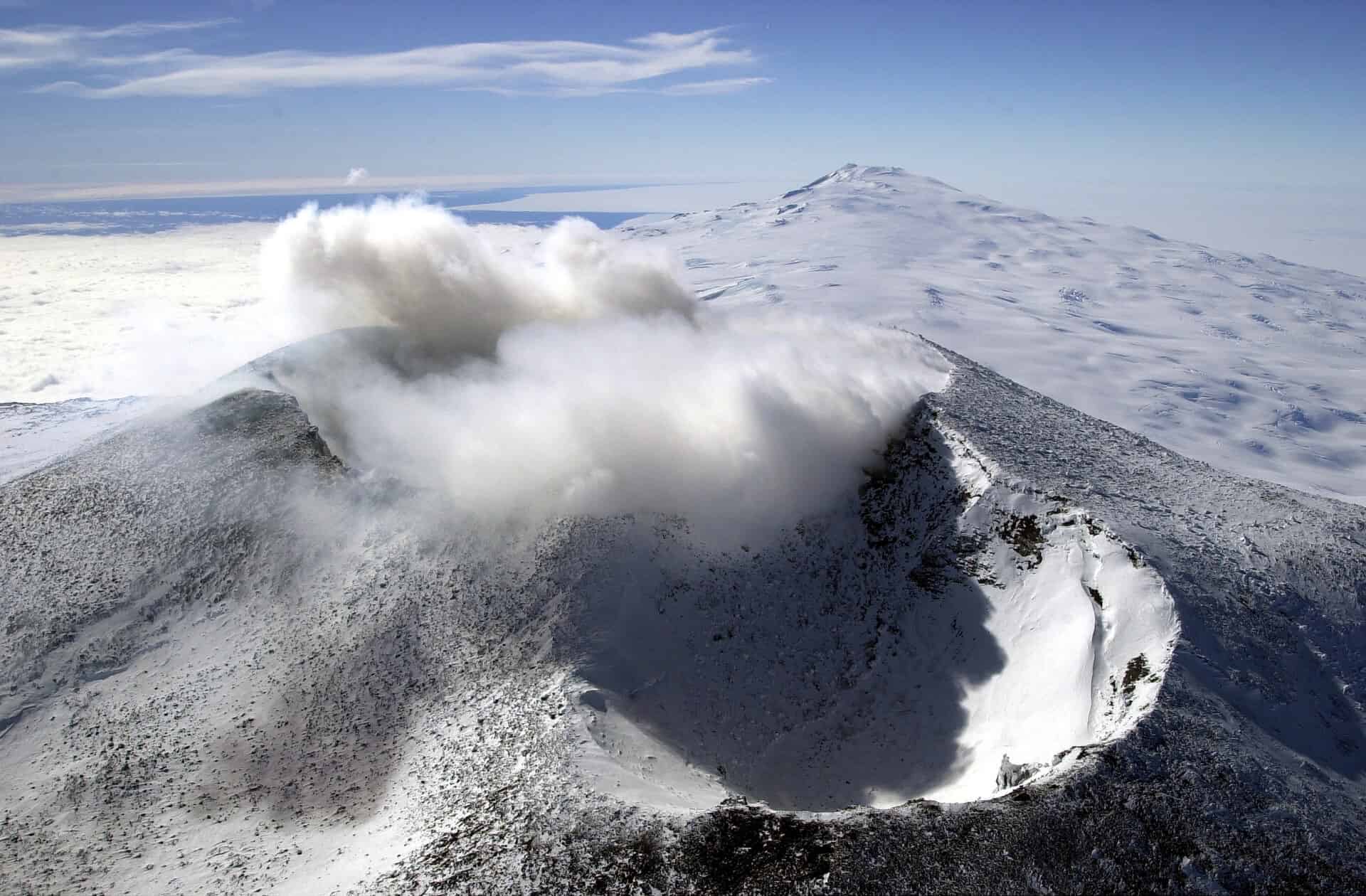
Mount Erebus, one of Antarctica’s best-known active volcanoes, is drawing attention for an unusual reason: its eruption plume is believed to release tiny amounts of gold. Estimates put that output at about 80 grams of microscopic gold per day, which is roughly $6,000 in value at current prices.
The volcano has been active for more than 50 years and is known for a long-lasting lava lake near its summit. Instead of producing visible chunks of metal, however, Erebus sends extremely fine gold particles into the air as part of the material carried by its plume.
That helps explain why the idea of “collecting” the gold is mostly fantasy. The particles are microscopic, scattered through a harsh volcanic environment, and released in one of the most remote places on Earth. Even reaching Mount Erebus is difficult, and the gold itself is not sitting there in an easy-to-gather form.
So while Mount Erebus gold dust in Antarctica makes for a striking headline, the reality is more scientific than practical. The volcano offers a rare look at how unusual materials can move through volcanic systems, but not a realistic treasure hunt.