Researchers are using AI gut microbiome design to tackle a long-standing problem in nutrition and health science: how to identify the best mix of gut microbes and nutrients to produce helpful metabolites from dietary fiber. The work, highlighted by Nature, focuses on the complex way intestinal microorganisms process food components and influence human biology.
The gut microbiome plays a major role in breaking down dietary fiber into smaller compounds that can affect many aspects of health. But because the microbial ecosystem is highly diverse and interactions between species are difficult to predict, finding the right combinations of organisms and foods has been a major challenge for scientists.
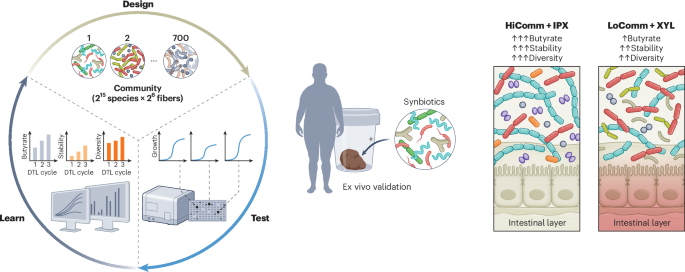
According to the report, a machine learning framework can now search for optimal microbial communities that maximize the production of targeted metabolites. Rather than relying only on trial-and-error experiments, the approach offers a more systematic way to map how specific microorganisms and nutrient inputs work together inside the gut environment.
The advance points to a more data-driven future for microbiome research, where AI could help design better experimental models and guide personalized nutrition strategies. While the summary points to research potential rather than immediate clinical use, it shows how machine learning may accelerate efforts to connect gut bacteria, diet and health outcomes.