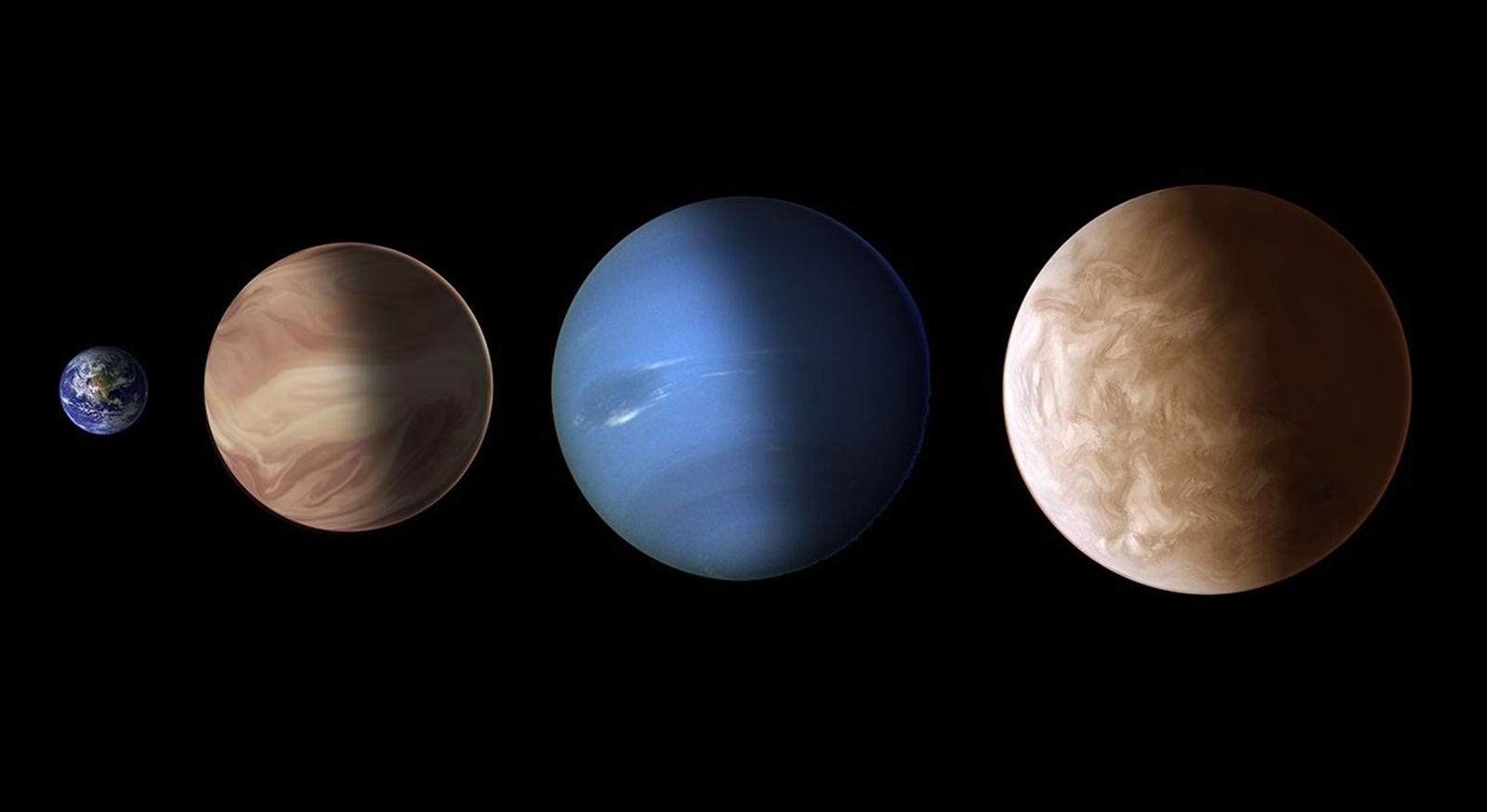
One of the biggest mysteries about our solar system may be the kind of planet it does not have. Across the galaxy, astronomers have identified thousands of worlds that are larger than Earth but smaller than Neptune, making this in-between class one of the most common known planet types. Yet none of the planets orbiting our sun fits that description.
When the planets in our own neighborhood are arranged by size, there is a noticeable gap. Earth stands as the largest rocky planet, while Neptune is far larger, leaving no example of the mid-sized worlds that appear so often around other stars. That missing category makes our solar system look less typical than once thought.
These planets are often discussed as a major feature of exoplanet discoveries because they occupy a size range that our solar system skipped entirely. Their abundance in NASA’s confirmed planet counts has helped reshape how scientists think about planetary systems, suggesting that the lineup around our sun may not be the standard model for the galaxy.
The contrast highlights a broader shift in astronomy: studying distant planetary systems is revealing that the solar system is not necessarily a template for how planets usually form. Instead, what seems ordinary here may be unusual elsewhere, and what is common in the galaxy may be completely absent at home.