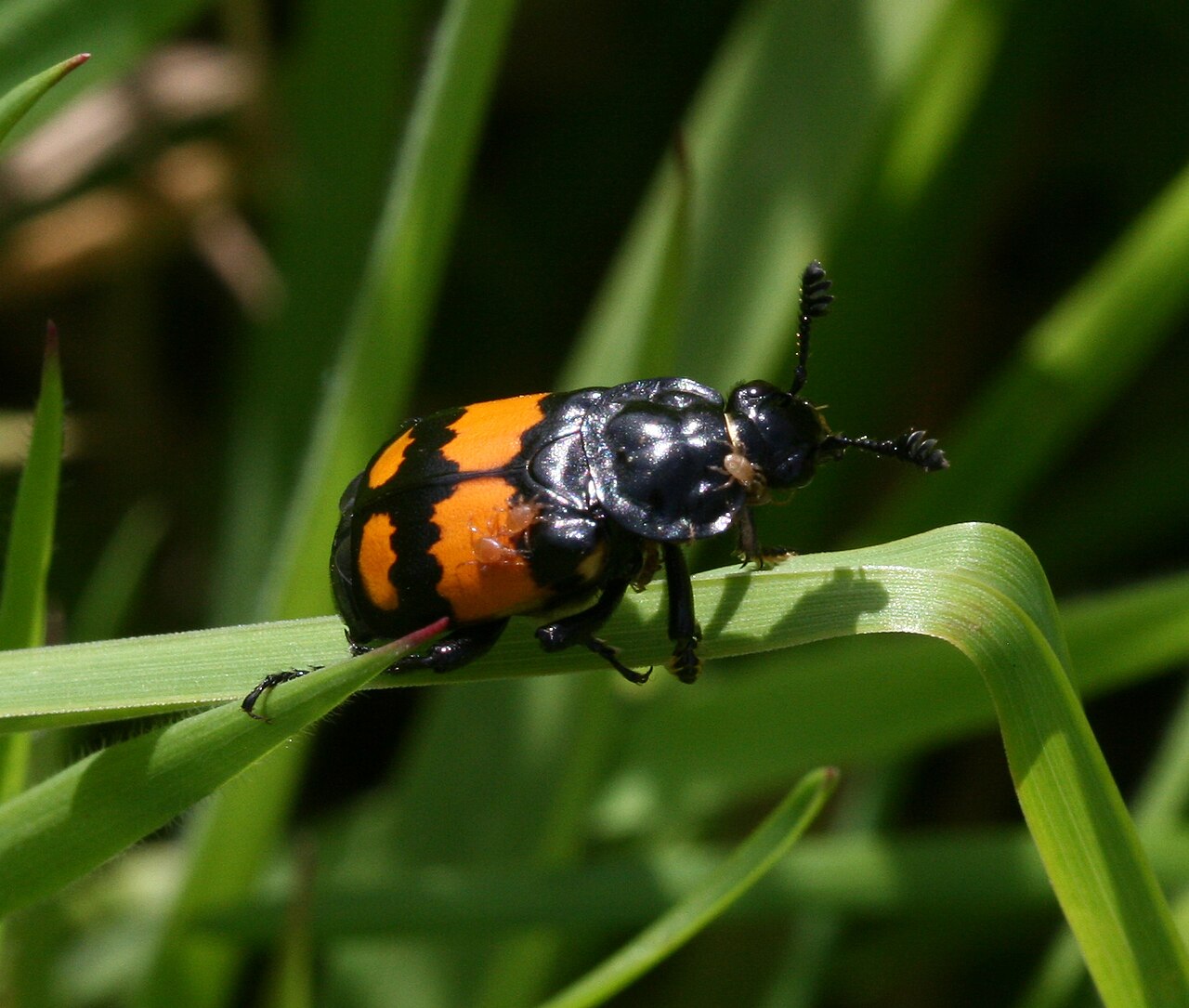
Burying beetles are already unusual insects because of the way they reproduce and care for their young. The species Nicrophorus vespilloides lives in forest leaf litter in the United Kingdom, where it searches for the bodies of small animals such as mice and birds. Those carcasses serve as the foundation for breeding and raising offspring.
The Defector piece highlights another striking part of the beetle's behavior: same-sex mounting. Framed in a deliberately provocative way, the article points to how these corpse-feeding beetles are drawing attention not just for their gruesome nursery habits, but also for sexual behavior that falls outside simple mating pair expectations.
That contrast is part of what makes burying beetles so notable to readers and researchers alike. They combine intense competition over scarce breeding resources with unusually hands-on parenting, making them one of the more distinctive examples of insect family life. Any additional behavior linked to courtship or mounting adds to interest in how these animals interact under pressure.
Taken together, the story presents Nicrophorus vespilloides as a species that is both scientifically intriguing and naturally sensational: a carrion-breeding beetle that turns dead animals into nurseries, cares for its young, and exhibits same-sex sexual behavior that challenges simplistic views of insect life.





