A new fossil study is challenging the familiar, straightforward version of human evolution. Instead of a simple march toward modern humanity, the research suggests that some of the features associated with modern humans may have emerged only after long-standing biological and cultural barriers started to break down.
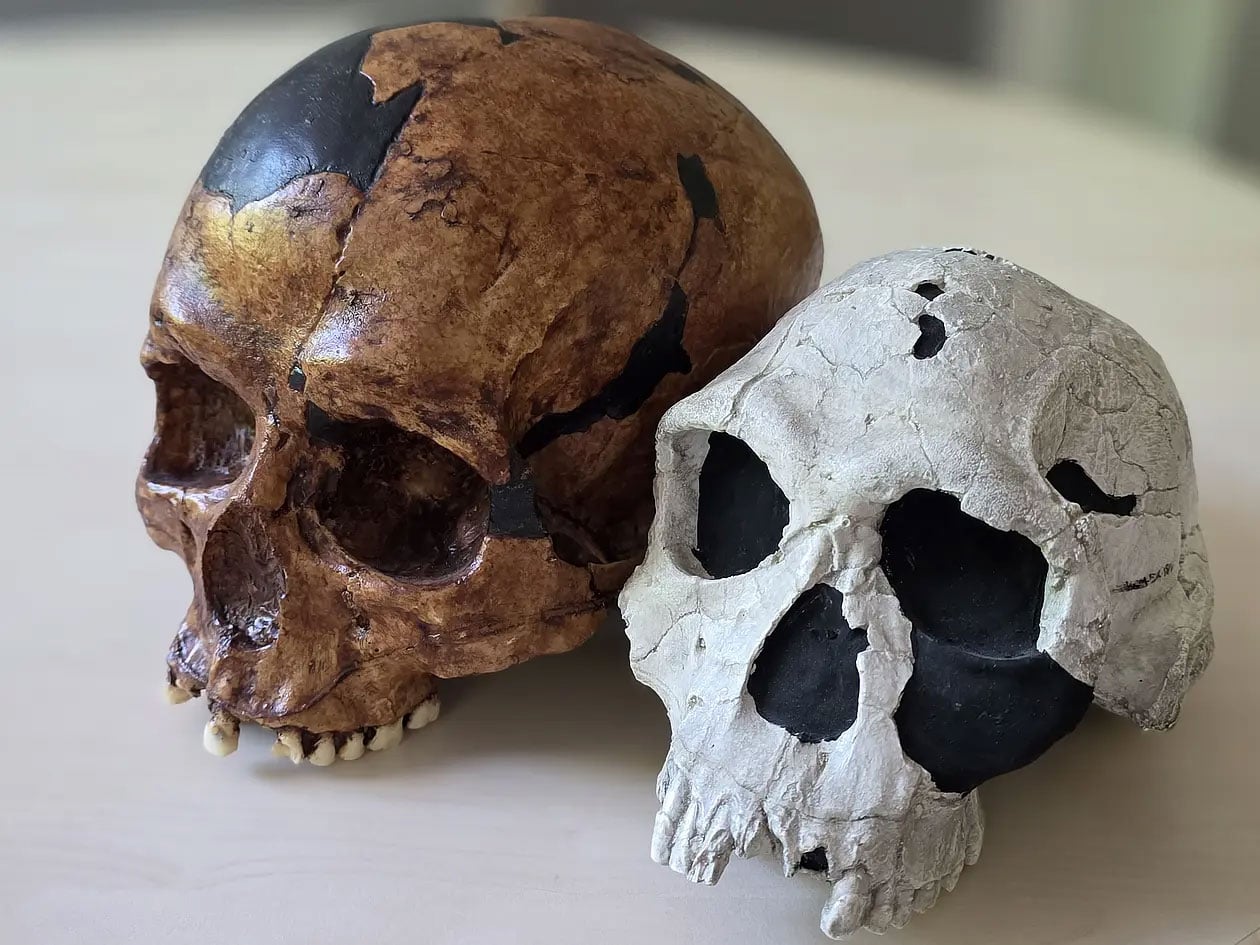
The study, highlighted by comparisons between Homo habilis and early Homo sapiens skulls, points to major evolutionary trends within the genus Homo. Among the clearest patterns are a substantial increase in brain size and accompanying changes in skull anatomy, which together help illustrate how human ancestors changed over time.
What makes the findings notable is the suggestion that these defining traits did not necessarily appear in a smooth, continuous way. The classic story of human evolution often emphasizes a gradual progression, but this work indicates that the path may have been more complicated, with important developments taking shape only after barriers between groups were reduced.
Taken together, the research adds to a growing view that human evolution was not a single, linear process. Instead, it may have involved overlapping populations, shifting cultural dynamics, and biological change unfolding in a more complex pattern than older models proposed.





