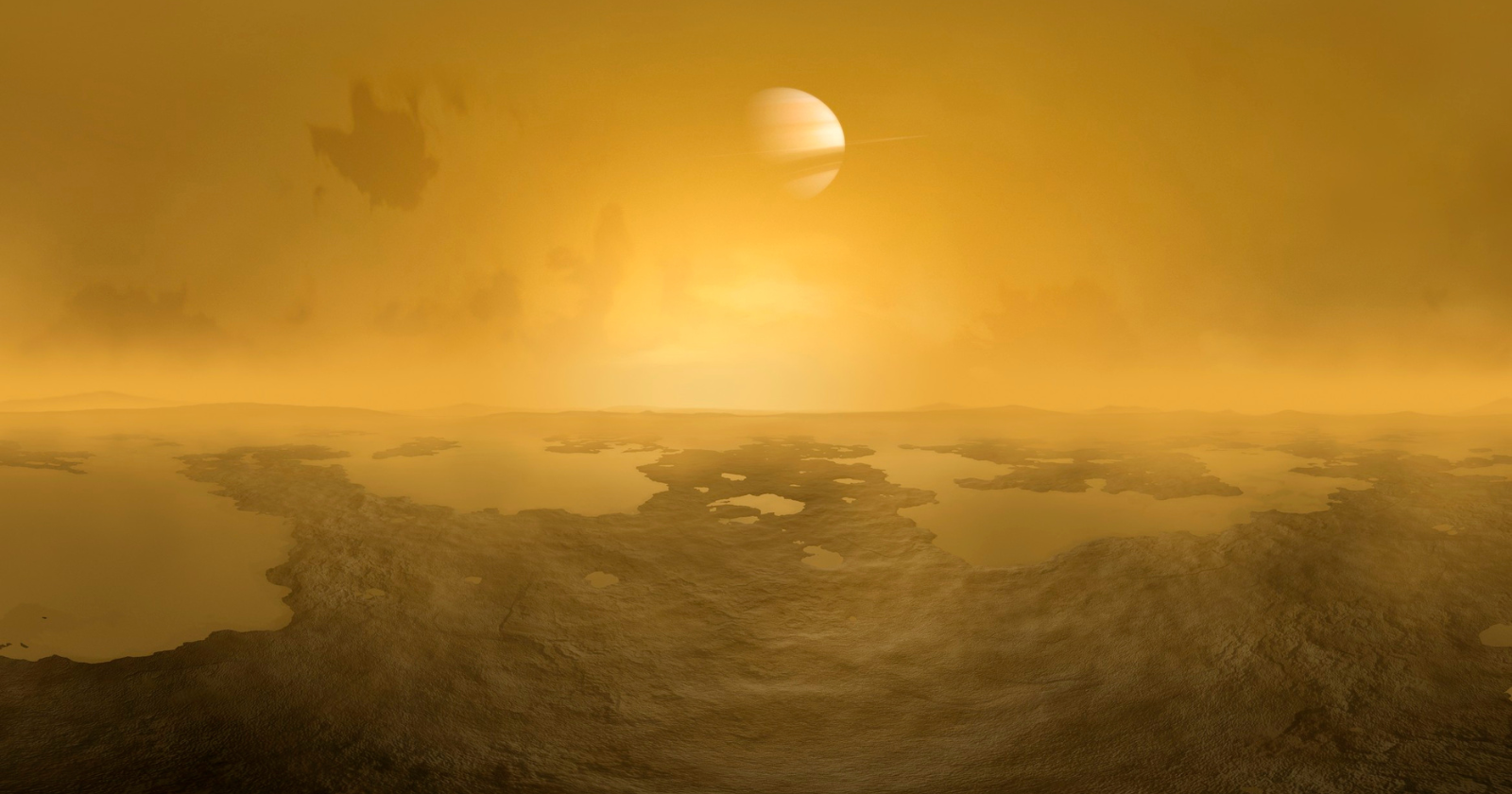
Titan, the largest moon of Saturn, has a seasonal pattern that in one important way resembles Earth: it moves through four seasons. The striking difference is how slowly those seasons unfold. Because Saturn takes about 29 Earth years to complete one trip around the Sun, each season on Titan lasts roughly seven Earth years.
That means a winter on Titan is not a short stretch of cold weather but a long era of weak sunlight and deep chill. The idea is hard to picture in Earth terms, where seasons change every few months. On Titan, the same seasonal conditions can remain in place for much of a childhood before the next shift begins.
Scientists find Titan especially interesting because it is an ice-locked world that still shows weather cycles, making it one of the more Earth-like places in the Solar System in that limited sense. Its long seasonal rhythm offers a very different version of the familiar pattern of winter, spring, summer and autumn.
The result is a moon where time itself feels stretched. Titan may share the basic idea of seasons with Earth, but Saturn’s long year turns each one into a prolonged chapter, with winter, summer and everything between lasting for years rather than months.





