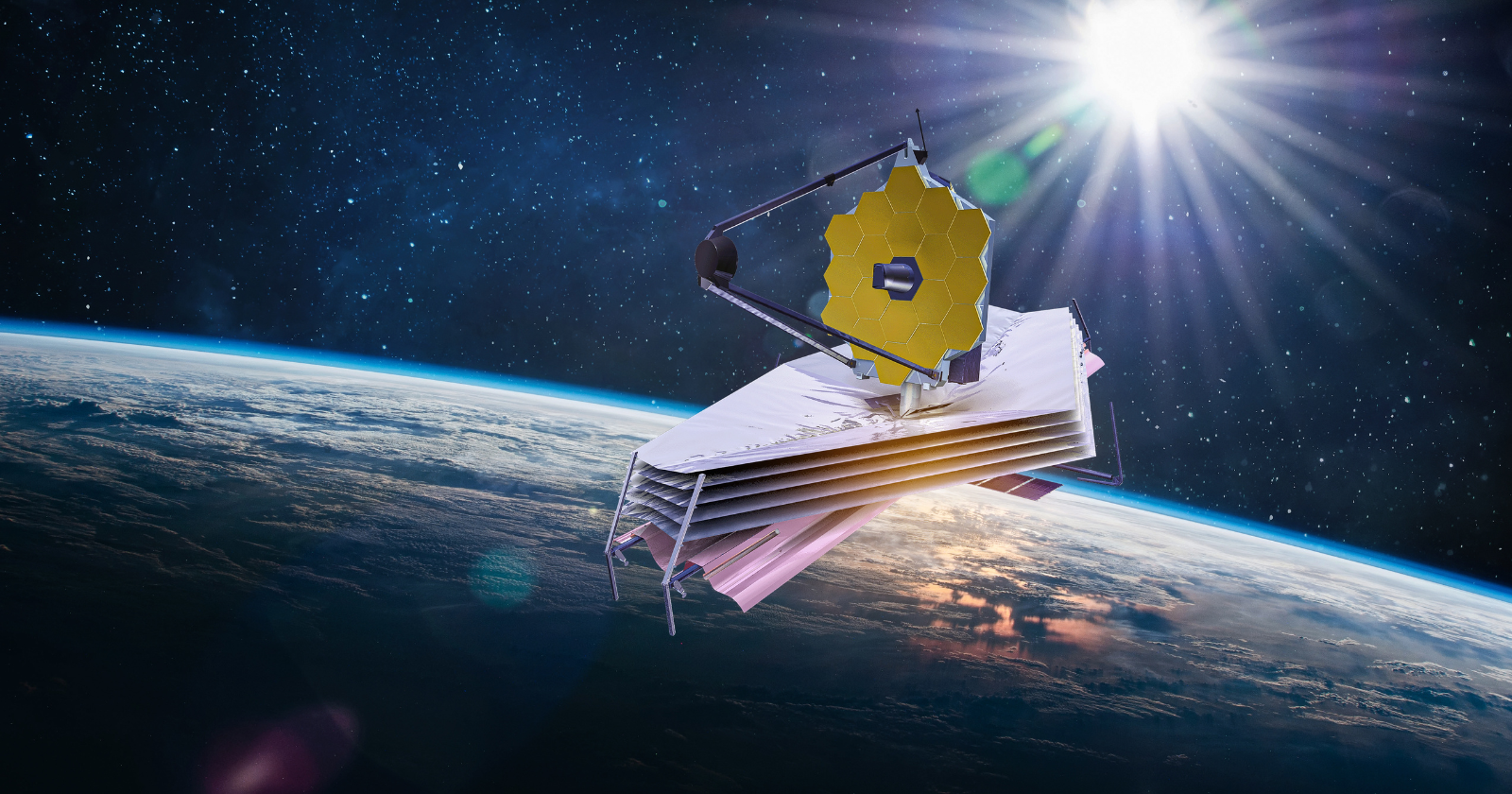
The James Webb Space Telescope is doing more than making distant objects look clearer. Its deepest observations also act like a look into cosmic history, because the light reaching the telescope has been traveling for billions of years. That means Webb does not only show what is far away in space, but also what the universe looked like long ago.
As Webb peers deeper into space, it is effectively seeing further back in time. The images highlighted in recent coverage include galaxies from just a few hundred million years after the Big Bang, placing them more than 13 billion years in the past. Instead of viewing the modern universe alone, astronomers are able to study an era when galaxies were still taking shape.
This idea changes the simple classroom picture of a telescope as only a magnifying tool. For nearby targets such as the Moon, magnification is an easy way to understand what a telescope does. But at the scale Webb explores, distance and time are linked, so every faint object can also be a record of an earlier stage of cosmic evolution.
Those observations are helping reveal a universe that appears younger and in some ways stranger than many expected. By collecting light from extremely distant galaxies, the James Webb telescope is giving scientists a clearer view of the early cosmos and expanding what we know about how the first structures emerged after the Big Bang.