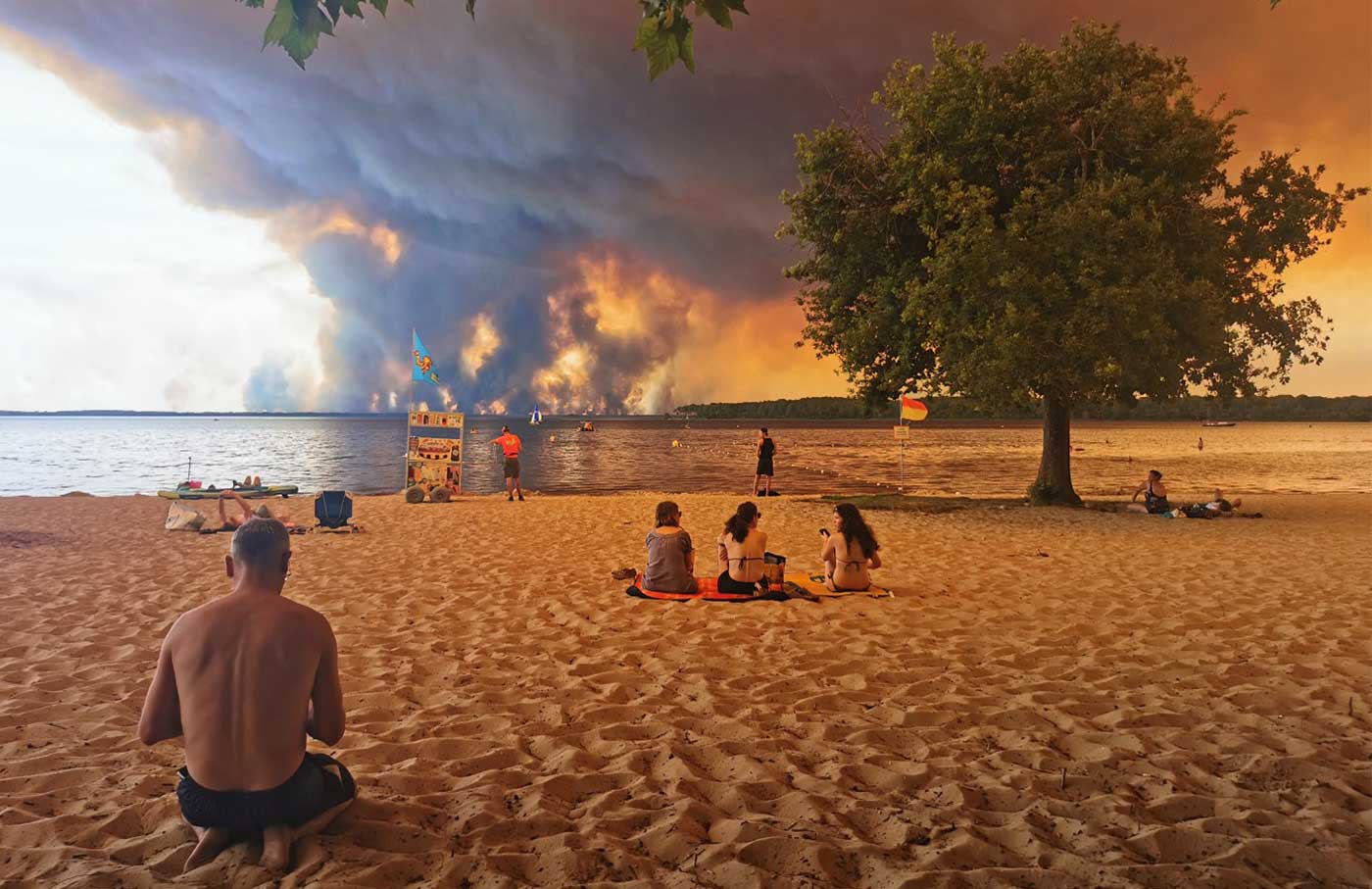
A commentary highlighted by The Nation argues that Europe’s worsening heat and fire risks are colliding with political hesitation, especially in the United Kingdom. The central claim is that even as the effects of climate change become harder to ignore across Europe, parts of the political mainstream still appear unwilling to address the crisis directly.
The piece points in particular to the UK’s Labour Party, suggesting it has been cautious about speaking openly about the climate emergency. That reluctance is presented as a form of political cover-up, not in the sense of denying climate change outright, but by downplaying the scale and urgency of the threat in public messaging.
The article frames this gap between events on the ground and political language as increasingly difficult to defend. With Europe facing intense summer conditions, the commentary argues that voters are seeing real-world signs of climate disruption while major parties remain wary of making climate a central, explicit issue.
More broadly, the piece raises questions about how democratic politics responds to long-term emergencies. Its message is that Europe’s climate reality is becoming impossible to separate from everyday political debate, and that avoiding direct discussion of the crisis may itself become a defining political choice.