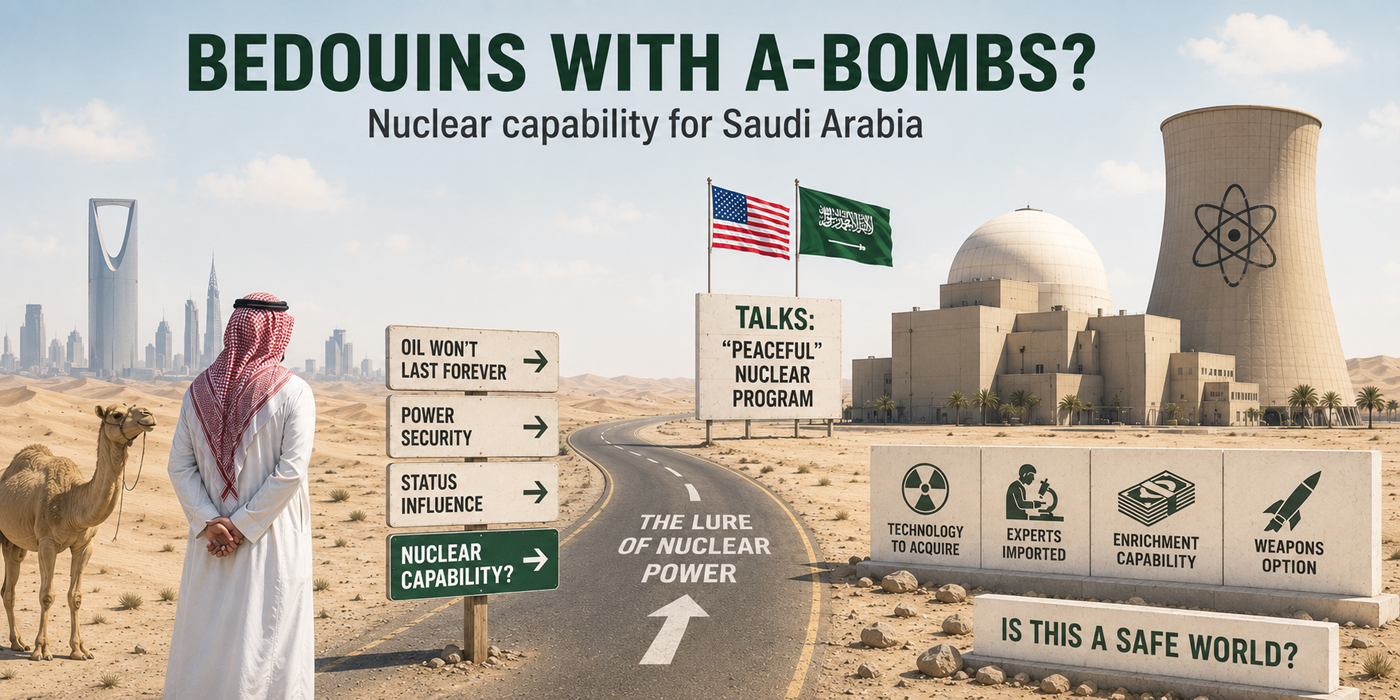
Washington and Riyadh have opened discussions about giving Saudi Arabia nuclear capability, a move both sides are publicly describing as peaceful and civilian in nature. Even so, the talks are drawing attention because nuclear infrastructure developed for non-military purposes can also have major strategic consequences.
The main issue is whether a Saudi nuclear program presented as an energy or development project could eventually shorten the path to a weapons option. Critics argue that once a country gains sensitive technology, expertise, and fuel-cycle capacity, the distinction between civilian use and military potential becomes much harder to separate.
Saudi Arabia's interest in nuclear capability is also being viewed through the broader security picture in the Middle East. Any discussion of atomic technology in the kingdom is likely to be linked to regional rivalries and deterrence calculations, rather than treated solely as a technical or economic matter.
If the talks advance, debate will likely focus on safeguards, inspections, and limits on what Saudi Arabia would be allowed to develop. Supporters may frame an agreement as a way to keep any program under oversight, while opponents see the negotiations as a risky step that could fuel fears of future nuclear proliferation in the region.