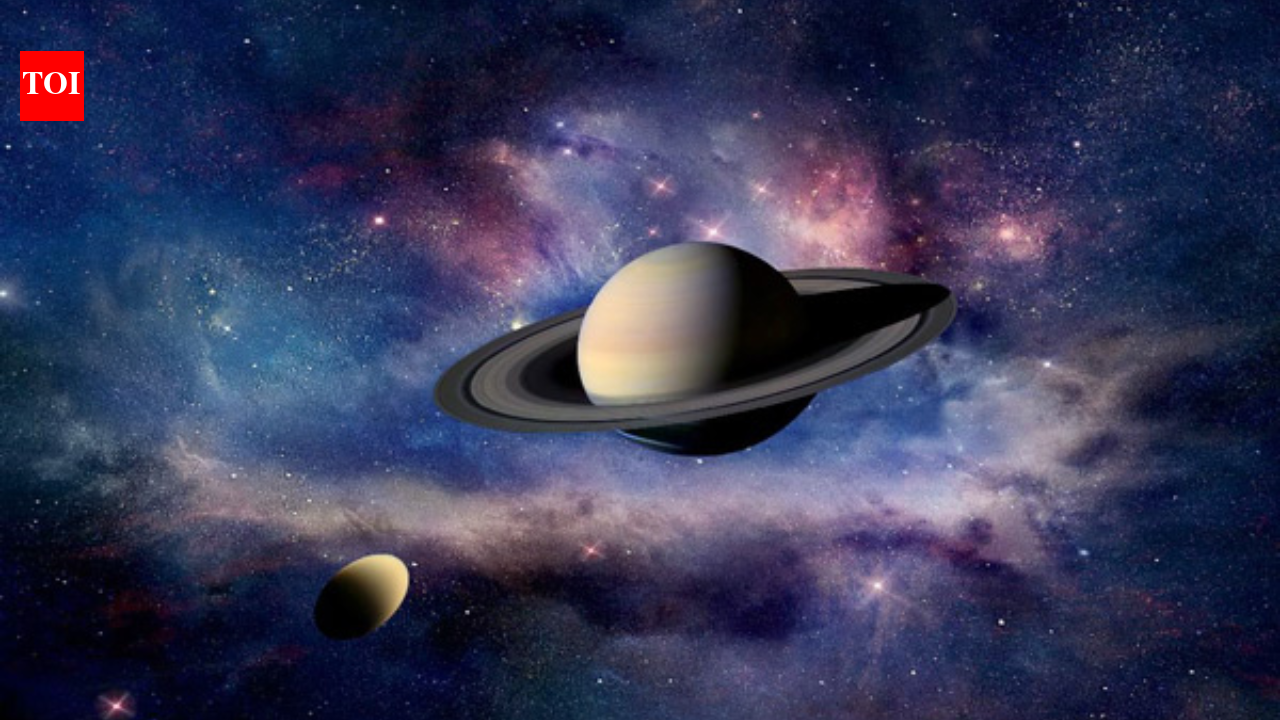
Titan, Saturn’s largest moon, stands out in the solar system because it experiences clouds, rain, rivers and changing seasons in ways that resemble Earth. The report highlights how this distant world has active weather patterns rather than being a static, frozen landscape.
One of the most striking details is the length of its seasons. Because Saturn takes roughly 29 years to complete one trip around the Sun, a single winter on Titan can last for about eight Earth years. That means seasonal changes there unfold far more slowly than they do on our planet.
The comparison with Earth is important because Titan appears to have a cycle involving clouds, rainfall and surface channels or rivers. Even though the moon is very different from Earth, these features make it one of the most intriguing places for scientists studying planetary weather and climate.
Titan’s long seasonal rhythm also gives researchers a rare chance to observe how an atmosphere and surface can interact over extended periods. Its Earth-like patterns, combined with Saturn’s much longer year, make Titan a compelling example of how familiar natural processes can play out in a very different world.