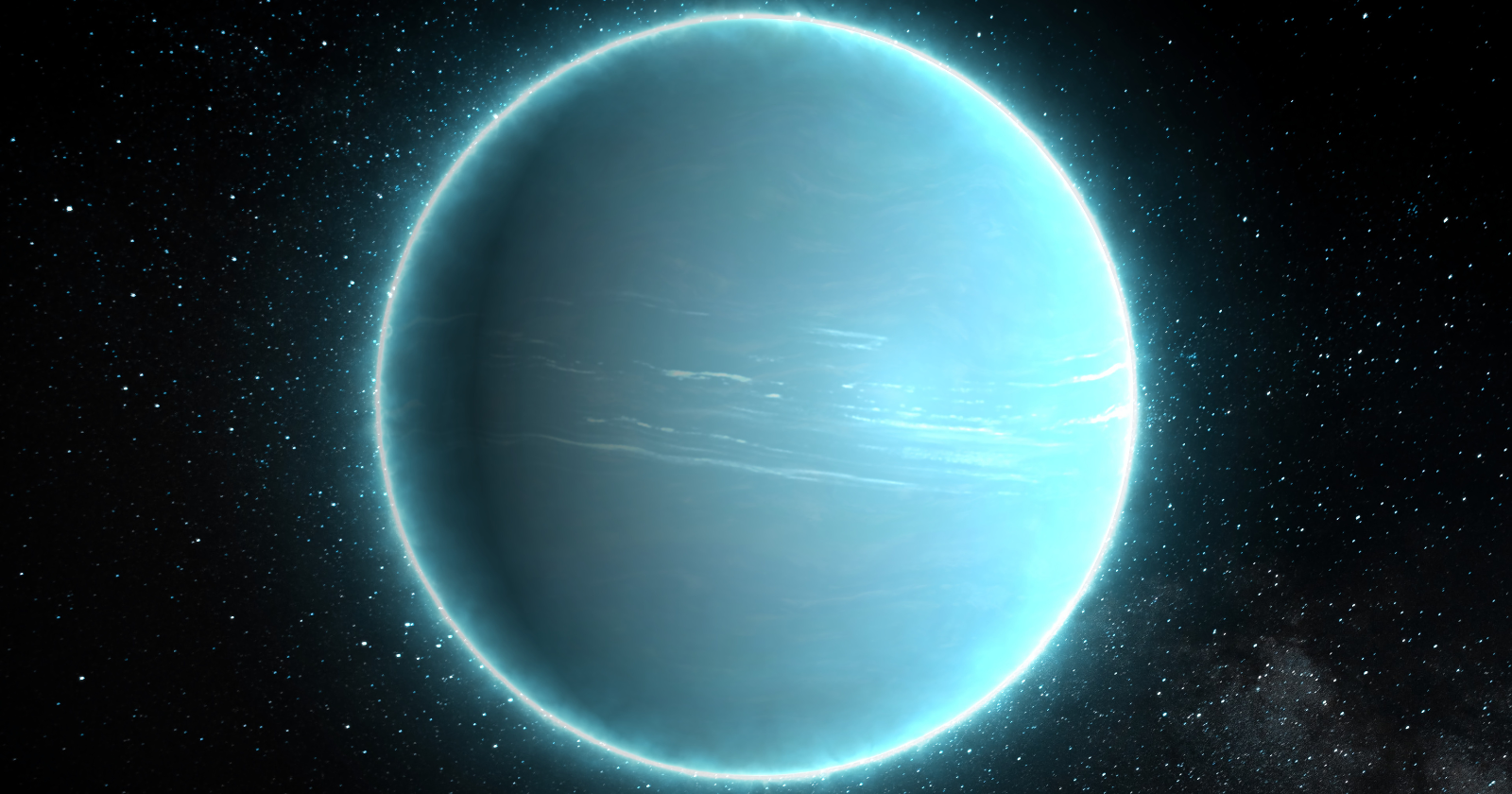
From a distance, Uranus looks peaceful: a smooth blue sphere with little of the dramatic banding seen on Jupiter or Saturn. That calm appearance, made familiar by Voyager-era images, has helped give the planet a reputation as one of the solar system’s quieter-looking worlds.
But the planet’s upper atmosphere hides a far less pleasant detail. According to the description in the report, Uranus’s cloud tops contain hydrogen sulfide, the gas best known on Earth for the smell of rotten eggs. In other words, the serene blue planet would be far more nauseating than beautiful to anyone close enough to experience its air.
The contrast is what makes Uranus so striking as a science story. Its color and featureless look can suggest a simple, uneventful world, yet its atmosphere points to a harsher and more hostile reality beneath that tranquil exterior. The idea that such a distant planet could “reek” adds an unexpected layer to how people imagine the outer solar system.
So while Uranus may appear bland in photographs, its chemistry tells a different story. The planet’s blue cloud tops are not just visually distinctive—they also hint at an atmosphere that is anything but inviting.





