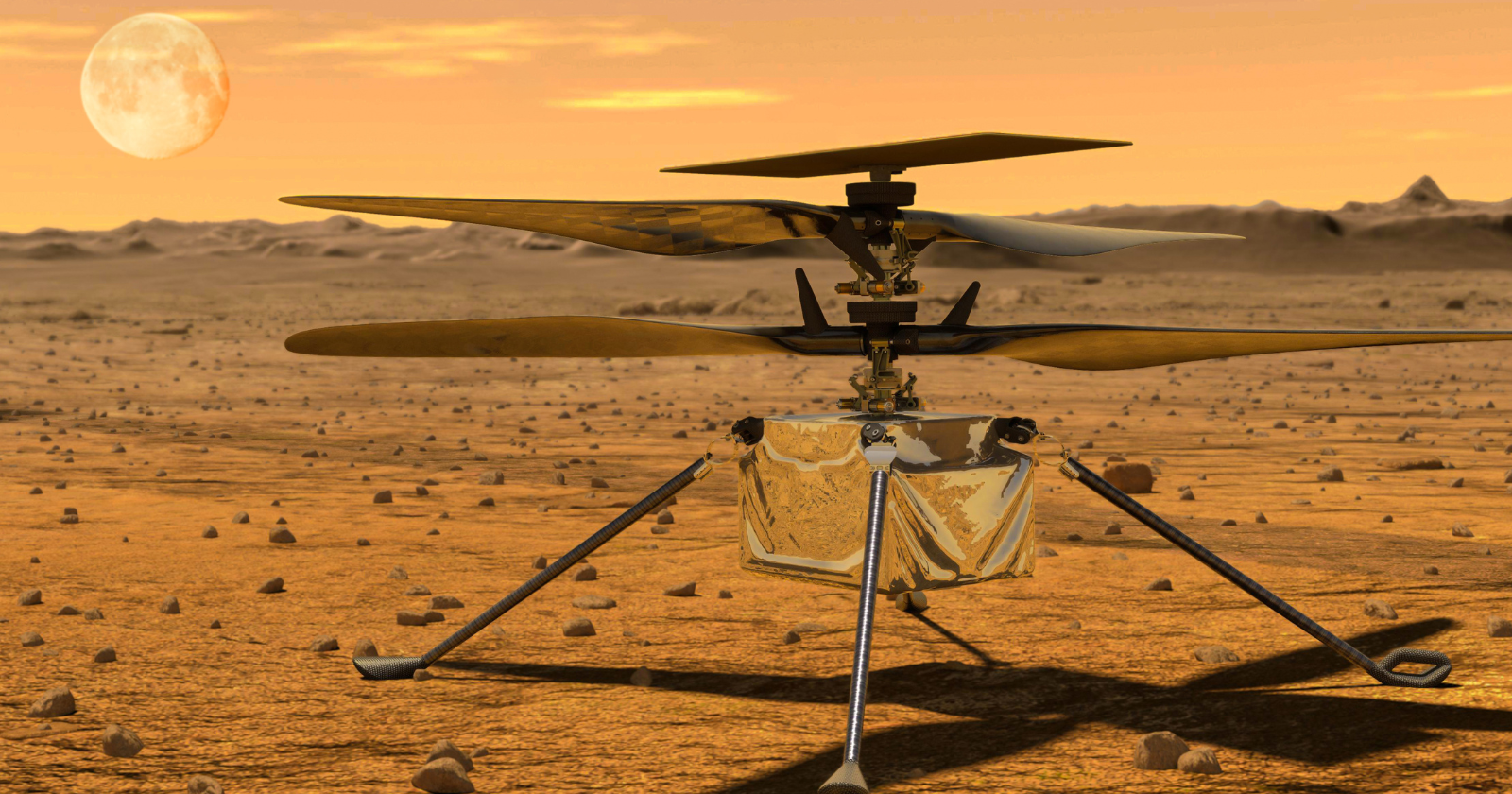
NASA’s Ingenuity helicopter was originally designed as a short technology demonstration to answer a basic question: could powered flight work in Mars’s extremely thin atmosphere, which is about one percent as dense as Earth’s. The plan called for just five flights over 30 days.
Instead, Ingenuity far outlasted its initial mission. The small rotorcraft completed 72 flights over nearly three years, turning a limited experiment into one of the most successful and unexpected aerial missions ever attempted on another world.
Its flying career came to an end on 18 January 2024 after a hard landing on a sand ripple. Even so, the helicopter did not simply shut down when flight operations stopped. According to the report, NASA engineers found that the aircraft remained useful after the accident, showing that its role did not end the moment it became grounded.
The Ingenuity mission is now being remembered not just for proving that flight on Mars is possible, but for how dramatically it exceeded expectations. Built for a handful of test hops, it became Mars’s longest-running aerial explorer and continued contributing even after its final landing.





