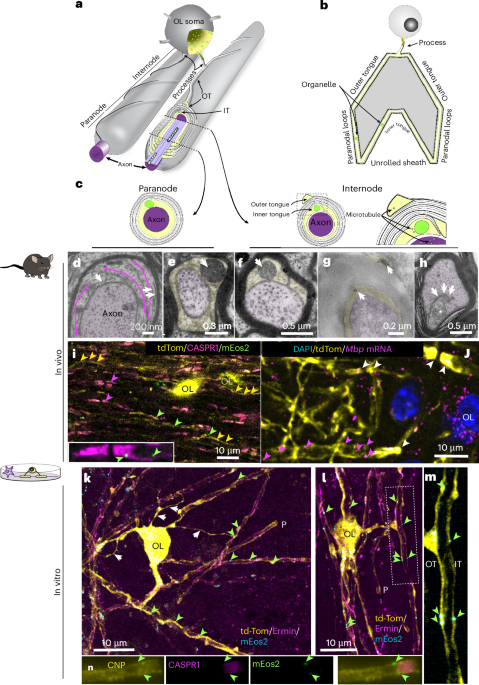
Researchers reporting on Nature.com describe an activity-modulated transport route across myelin, or TRAM, that appears to support motor-driven organelle transfer in oligodendrocytes. The work focuses on how these myelin-forming cells handle the movement of cargo while interacting closely with the axons they wrap.
Axons are already known to depend on intracellular transport to move materials between the cell body and distant terminals. According to the study description, the authors show that a comparable logistical problem also exists on a smaller scale in oligodendrocytes, whose branching processes must coordinate with the axons they myelinate. In that context, TRAM is presented as a route that helps organelles cross myelin in a way linked to cellular activity.
The trimmed methods snippet points to mouse experiments involving conditional knockout Kif21b transgenic mice as well as reporter lines with tamoxifen-inducible PLPCreERT2 and fluorescent labeling tools. Those models suggest the team tracked or manipulated transport-related machinery in oligodendrocytes to examine how cargo movement is organized across myelin.
Taken together, the study frames myelin as more than a static insulating layer. It highlights a dynamic transport system within oligodendrocytes that may be important for maintaining their close functional relationship with axons and for understanding how myelinated neural circuits are supported at the cellular level.