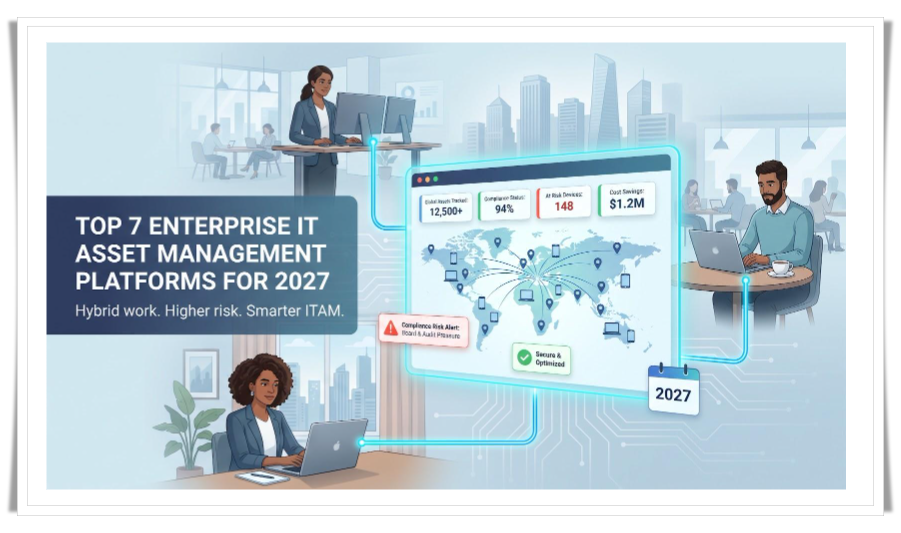
Enterprise IT asset management is increasingly being treated as a business risk issue rather than a routine IT task. The comparison of seven enterprise IT asset management platforms for 2027 highlights how lost or untracked devices can affect security, budgets and regulatory exposure.
The article frames the problem in practical terms: when companies lack clear visibility into laptops and other technology assets, the impact can spread beyond help desk delays or inventory errors. It points to major GDPR penalties from EU watchdogs as an example of how weak asset oversight can turn into a costly compliance problem.
The software roundup focuses on the core areas large organizations usually weigh when choosing an ITAM platform. Those areas include security controls, automation, overall cost, compliance support, lifecycle tracking and whether a system matches broader business requirements.
For enterprise buyers planning for 2027, the key takeaway is that IT asset management software is being judged on more than simple inventory tracking. Platforms are expected to help companies monitor assets through their full lifecycle, reduce manual work, improve audit readiness and limit the financial risk tied to missing or unmanaged devices.