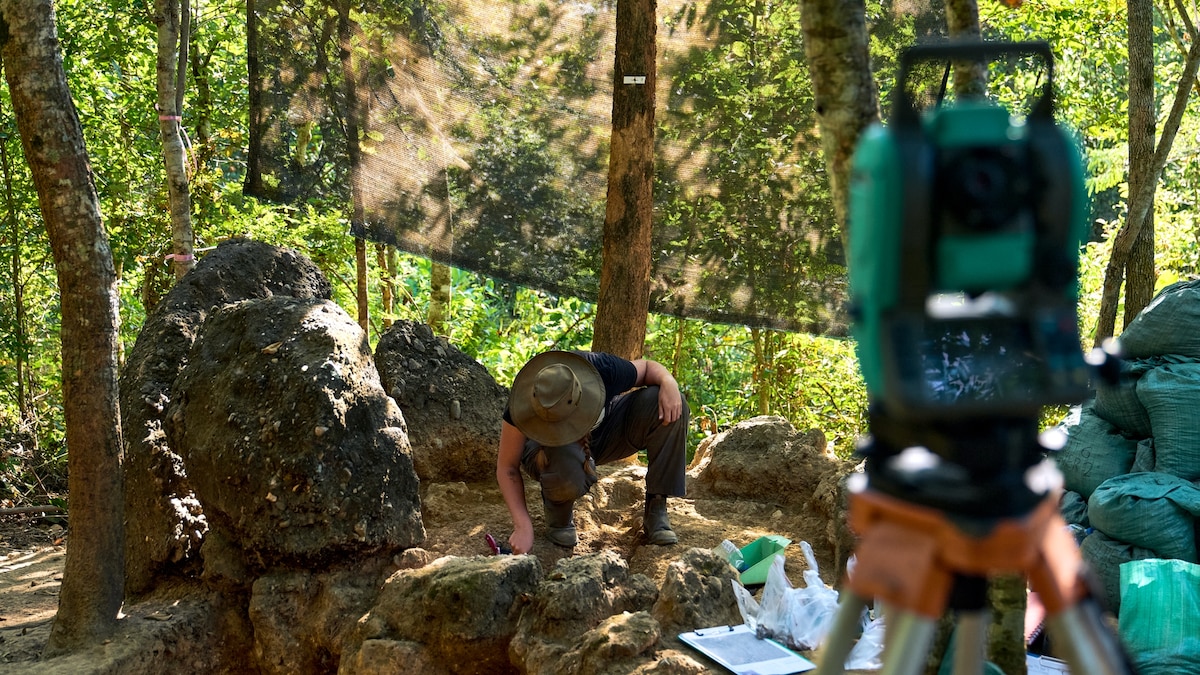
Archaeologists working in Laos say a newly excavated giant stone jar contained the remains of 37 people, a discovery that could shed new light on the long-debated purpose of the Plain of Jars. The site is known for its massive megalithic containers, and this burial find adds important evidence to the idea that at least some of them were tied to funerary activity.
The newly examined jar held a jumble of skeletal remains rather than neatly arranged bodies. That detail is significant because it may help explain why the bones were found mixed together. Instead of pointing to a dramatic or unusual ritual, some researchers think the process may have been relatively practical, with a single jar used again and again over a long period.
Under that interpretation, the container may have served as a primary place for the disposal of the dead for centuries. Repeated use could account for the disarticulated condition of the bones, as older remains were disturbed when new ones were added. If correct, that would make the jar less of a one-time burial chamber and more of a long-term funerary container.
The discovery does not solve every question surrounding the Plain of Jars, but it gives archaeologists a clearer framework for understanding how these stone vessels may have functioned. By linking one giant jar to the remains of dozens of people, the excavation strengthens the case that everyday mortuary practices, rather than a single mysterious event, may be behind at least part of the site's enduring mystery.





