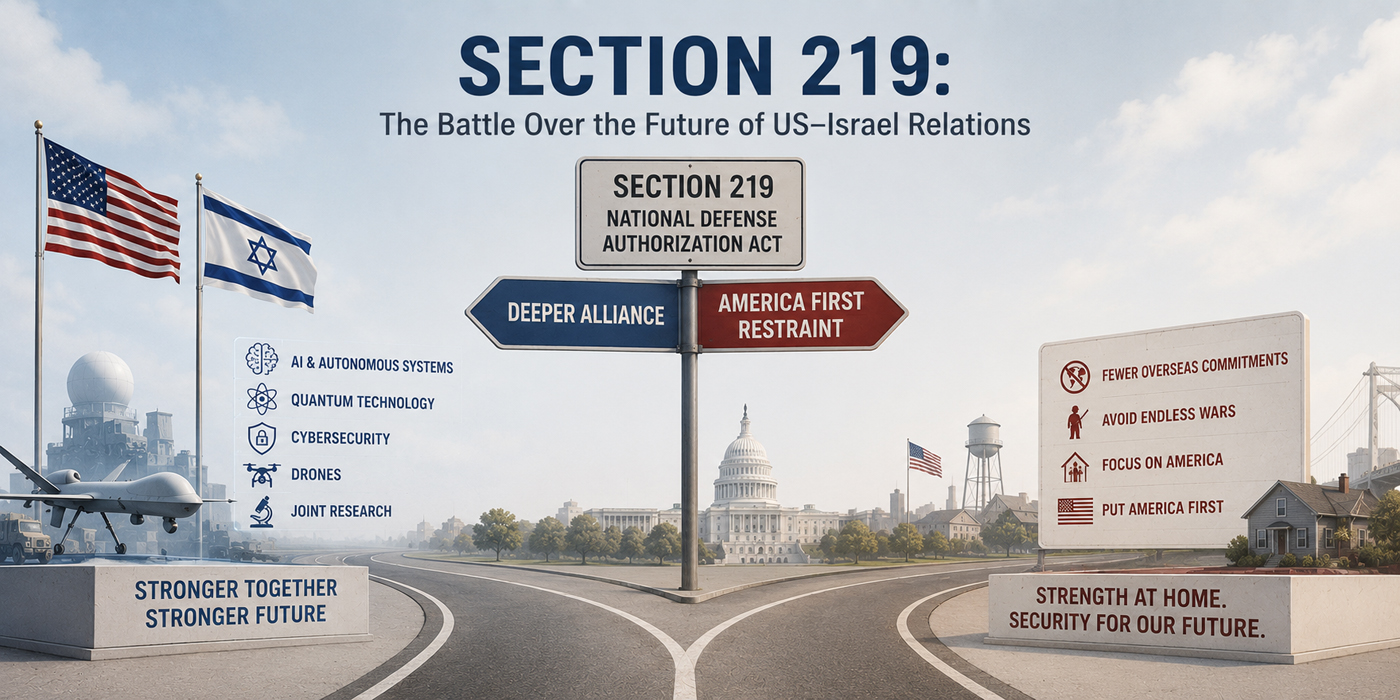
Buried inside the annual National Defense Authorization Act, a provision first identified as Section 224 and later renumbered Section 219 in the House version has become a flashpoint in the debate over future US-Israel relations. On its face, the measure is described as a way to expand technological and defense cooperation, but the fight around it suggests much larger political stakes.
The issue matters because the NDAA is not just a spending bill. It is one of Congress's main vehicles for setting defense priorities, and even a single section can shape long-term policy. In this case, Section 219 is being watched as a sign of how lawmakers want to define the US-Israel partnership in the years ahead.
The broader argument is about more than military coordination. Supporters see closer defense and technology ties as a natural extension of an established security relationship. Critics view the provision as part of a deeper struggle over how much US policy toward Israel should be reinforced through defense legislation.
That is why Section 219 has drawn attention beyond its technical wording. Its path through Congress could help show whether future US-Israel relations will continue to be strengthened through bipartisan defense measures or become more openly contested as part of a wider political debate.