Astronauts aboard the International Space Station live through a sunrise or sunset roughly every 45 minutes because the laboratory circles Earth about every 92 minutes. Over the course of what would be a normal workday on Earth, that adds up to 16 sunrises and 16 sunsets, with the light outside constantly shifting as the station moves around the planet.
That dramatic view may be one of the most striking parts of life in orbit, but it is not useful for a normal human schedule. The crew still needs regular periods of light and darkness, so the station does not let its daily routine follow the rapid changes outside the windows. Instead, astronauts work to a fixed clock.
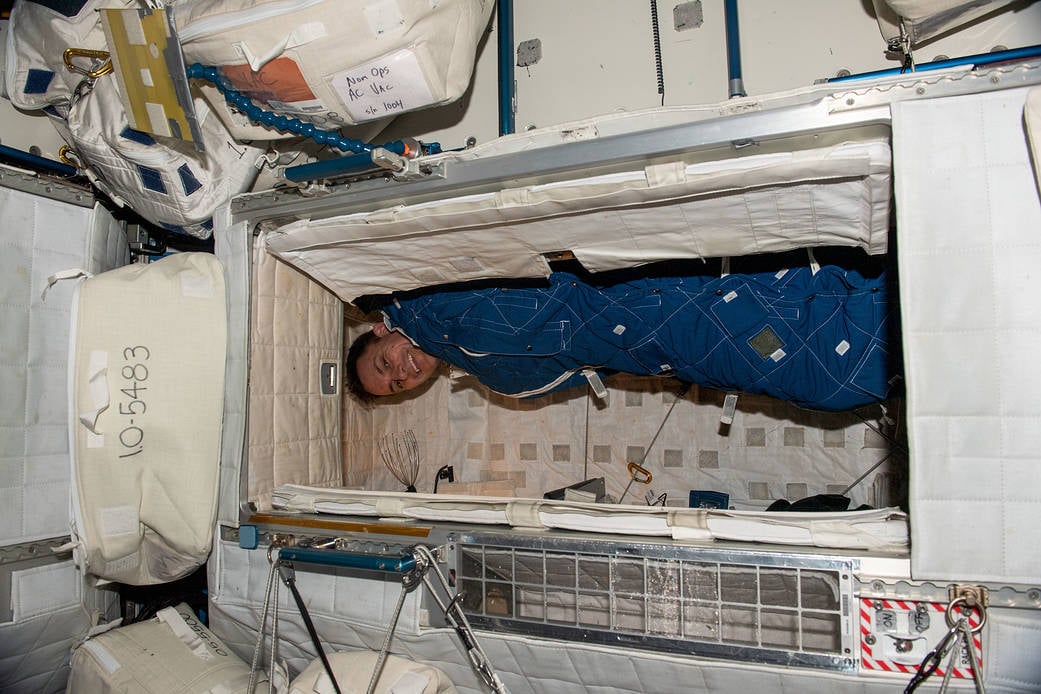
The ISS uses Greenwich Mean Time as its shared time standard, allowing crews to keep a consistent timetable despite the nonstop orbital sunrises and sunsets. Window shades are pulled down when needed so the interior environment supports a stable sleep and work pattern rather than the confusing daylight cycle outside.
In practice, life aboard the station depends on treating orbit as background and relying on Earth-based time. Even as a blue line forms at Earth’s edge, the Sun rises and shadows sharpen across the station’s modules and solar arrays, the crew follows a schedule designed for human bodies, not for a sunrise every 45 minutes.